
The First Republic
The history of Italy is a tapestry woven from a myriad of regions, cultures, and political entities. One of the pivotal chapters in this rich history is the era of Italy's First Republic. Spanning from 1946 to 1992, this period was marked by a complex interplay of political, social, and economic changes that ultimately shaped modern Italy. In this detailed article, we will delve into the depths of Italy's First Republic, examining its historical origins, political landscape, key events, influential figures, and the profound transformations it brought to the Italian society.
Historical Background: Italy Emerges from the Shadows of World War II
The First Republic of Italy emerged in the aftermath of World War II. Prior to this period, Italy had endured the rule of Benito Mussolini's Fascist regime, followed by the turmoil of the war. The surrender of Italy to the Allied forces in 1943 set the stage for a new beginning. The nation was liberated from fascism, and its political landscape was in need of profound reconstruction.
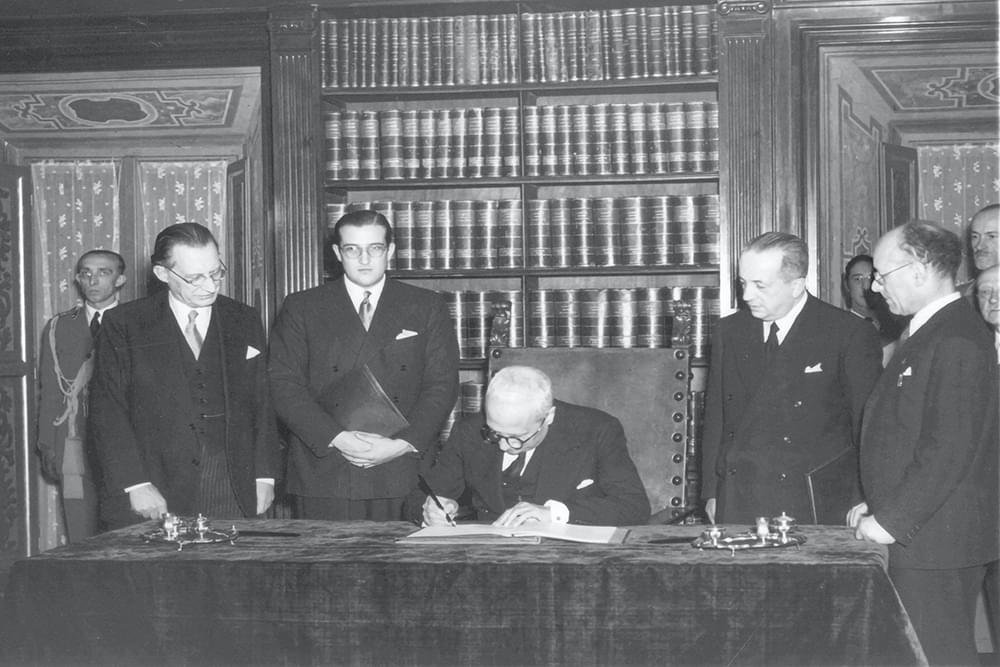
In June 1946, Italy held a referendum to choose between a monarchy and a republic. The majority of Italians voted for the latter, leading to the establishment of the Italian Republic. This marked the official beginning of Italy's First Republic, with the adoption of a new constitution in 1948 formalizing the nation's status as a republic.
Political Landscape: The Birth of a Democratic Italy
The First Republic ushered in an era of democracy and political pluralism in Italy. The new constitution laid the foundation for a parliamentary system, with a President as the head of state and a Prime Minister as the head of government. It also granted citizens numerous civil liberties and established the principle of the rule of law.
Political parties played a significant role in shaping the Italian political landscape during this period. Key parties included the Christian Democracy (Democrazia Cristiana), the Italian Communist Party (Partito Comunista Italiano), and the Italian Socialist Party (Partito Socialista Italiano). The dynamic interplay among these parties defined the political climate of the First Republic.
The Christian Democracy party, in particular, exerted a strong influence on Italian politics throughout this era. It occupied the center-right position and often formed coalitions with smaller parties to maintain stability in the government. This political maneuvering contributed to the Christian Democracy's long-standing dominance.
Economic Transformation: From Post-War Devastation to Economic Boom
The early years of the First Republic were characterized by post-war reconstruction and economic challenges. Italy faced significant war-related destruction, including damaged infrastructure and a struggling economy. However, the nation's determination, combined with financial aid from the United States through the Marshall Plan, led to a remarkable economic turnaround.
Italy's economy experienced a period of unprecedented growth during the 1950s and 1960s, known as the "Italian Economic Miracle" or "Il Miracolo Economico." This period saw a surge in industrialization, urbanization, and a rising standard of living for many Italians. Key sectors such as manufacturing, automotive, and fashion flourished, propelling Italy into the ranks of the world's major economies.
Societal Changes: The Role of Women, Education, and Cultural Flourishing
The First Republic also witnessed significant societal changes. Women's rights gained momentum during this period, with women gaining the right to vote in 1946 and increased access to education and employment opportunities. These changes paved the way for greater gender equality in Italy.
The educational landscape also evolved, with the government investing in schools and universities. As a result, there was an increase in literacy rates and access to higher education, which contributed to the intellectual and cultural development of the nation.
The cultural scene thrived during the First Republic, with Italy producing influential artists, filmmakers, and writers. Figures like Federico Fellini, Sophia Loren, and Italo Calvino made significant contributions to the global cultural landscape, bringing Italian art and culture to the forefront.
Key Events: Challenges and Milestones of Italy's First Republic
Italy's First Republic was marked by a series of notable events and challenges that shaped its trajectory. Some of the key milestones include:
1950
European Integration - Italy played a crucial role in the founding of the European Coal and Steel Community (ECSC), a precursor to the European Union (EU). European integration was seen as a way to prevent future conflicts and promote economic cooperation.
1960s
Social Movements - The 1960s saw the rise of various social movements, including labor strikes, student protests, and the feminist movement. These movements reflected the changing aspirations and concerns of Italian society.
1970s
Terrorism - Italy experienced a wave of domestic terrorism, including the actions of the Red Brigades, a far-left extremist group. These acts of violence posed a significant challenge to the stability of the government.
1980s
Corruption Scandals - The 1980s brought to light a series of corruption scandals, including the "Mani Pulite" (Clean Hands) investigation, which exposed widespread corruption in Italian politics and business.
1992
End of the First Republic - The First Republic came to an end in 1992 with the resignation of Prime Minister Giulio Andreotti and the collapse of the Christian Democracy party. This marked a significant turning point in Italian politics.
Influential Figures: The Faces of Italy's First Republic
Numerous individuals left their mark on Italy's First Republic, shaping its politics, culture, and society. Here are some of the most influential figures:
Alcide De Gasperi
As the founder of the Christian Democracy party and Italy's Prime Minister, De Gasperi played a key role in shaping post-war Italy and establishing its democratic institutions.
Palmiro Togliatti
The leader of the Italian Communist Party, Togliatti was instrumental in promoting communism in Italy while also advocating for democratic reforms.
Enrico Mattei
As the head of the state-owned energy company ENI, Mattei played a pivotal role in securing energy resources for Italy and challenging the dominance of multinational oil companies.
Aldo Moro
A prominent Christian Democrat, Moro served as Prime Minister multiple times and attempted to forge alliances between different political factions. Tragically, he was kidnapped and killed by the Red Brigades in 1978.
Sandro Pertini
Pertini served as President of Italy from 1978 to 1985 and was known for his dedication to social justice and human rights.
Legacy: Italy's First Republic in Modern Italy
The First Republic of Italy played a crucial role in shaping the Italy we know today. Its legacy includes:
Political Pluralism
The First Republic laid the groundwork for Italy's modern political landscape, with a diverse array of political parties that continue to influence the nation's politics.
Economic Transformation
The Italian Economic Miracle transformed Italy into one of the world's leading economies, and its industrial and technological achievements continue to impact the country's prosperity.
Societal Progress
Advances in women's rights, education, and cultural flourishing during the First Republic have left a lasting impact on Italian society.
European Integration
Italy's role in the European integration process has solidified its place as a founding member of the European Union, shaping its foreign policy and international standing.
Lessons Learned
The corruption scandals of the 1980s and the challenges posed by domestic terrorism serve as cautionary tales, leading to reforms in Italy's political and judicial systems.
Conclusion
In conclusion, Italy's First Republic was a transformative era in the nation's history, marked by political, economic, and societal changes. It set Italy on a trajectory towards democracy, economic prosperity, and cultural vibrancy. Understanding this period is essential for comprehending modern Italy and the complex factors that have shaped its identity on the world stage. Italy's First Republic stands as a testament to the resilience and adaptability of a nation recovering from the devastation of war and emerging as a global powerhouse.


