Quite Frankly - Superstitions!
I am not what you would call "SUPERstitious". At most, I may be a wee bit "...'stitious".
Superstitions are silly and childish; and by most measures, we should be considered adults by now. Although it seems that the major difference between me as a child and me as an adult is that my growth spurts are no longer vertical but horizontal. (My formerly narrow waist and currently broad mind are exchanging places.)
But superstitions are harmless, right? What could it cost us to knock on wood, or in Italy, to touch iron?
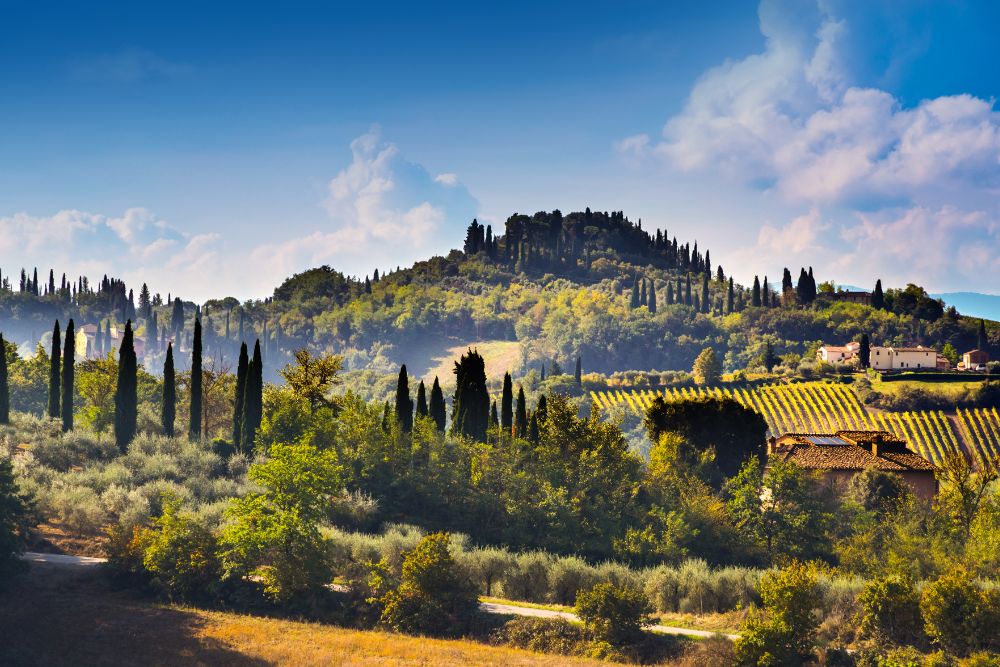
Superstitious beliefs are rampant in southern Italy where my wife and I now reside. Of course, I try to learn them and fit in with local traditions. However, my charming wife the ever-lovely Ora, just won't subscribe. To her credit, she has accepted me as a 'package deal' and no longer points out most of my shortcomings. But she tempts fate when, without seeking my advice, she cheerfully squashes housebound spiders in spite of the well-worn wisdom regarding the risk of financial ruin.
Our Italian neighbors in Basilicata regularly take us to task. They take turns trying to save us from our innocent, but uninformed, behaviors. Believe me when I say that 'Mr. Rodger's Neighborhood', (a popular TV program aimed to help socialize children in the U.S.), did not adequately prepare us for our new neighborhood.
Don't misunderstand. We are immensely fortunate to be surrounded by so many wonderful people. Personally, I am overwhelmed by their intelligence, kindness and generosity. But many of them are super-superstitious and they worry about us. We might do something on the 'wrong day' or not do something which we ought to be doing. For instance, it surprised us to learn that 13, (as in Friday the 13th) is considered lucky while the number 17 is unlucky. Unless, that is, you are having a dinner party for 13 people at the table... especially if the affair is set on Friday the 17th. (We broke out an additional table to avoid the consequences, whatever they were.) While managing to negotiate 13 people at dinner, we were still made aware not to seat an unmarried person at a corner or the poor soul will never marry. If someone happened to say the same word at the time as someone else, we all touched our noses, or they would never marry. We must never, ever sweep a young woman's feet with a broom or she will not marry. (Luckily, my wife and I are already married, but you can't be too careful with this stuff.)
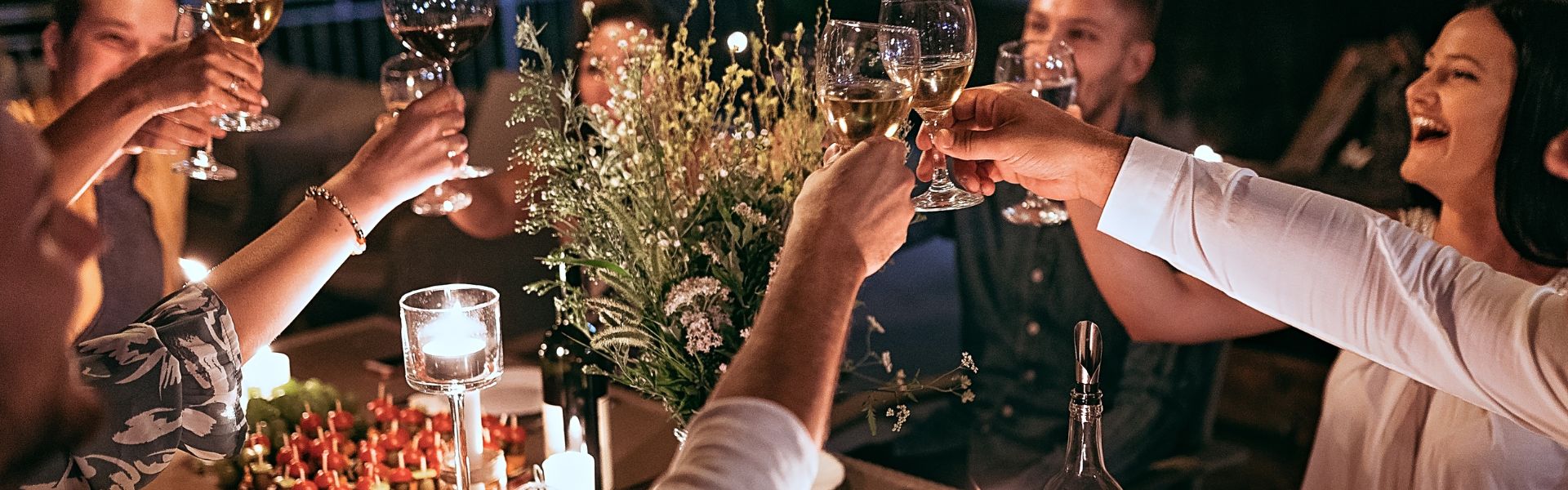
Married or single, never pour wine 'back-handed' or toast with water or cross arms for the ritual 'clinking of glasses'; and be sure to look your drinking companions straight in the eyes or you risk 7 years of bad sex. Don't set bread on the table upside down and don't set shoes on the table. (It's certain bad luck and probably bad hygiene as well.)
I once gave a small penknife to a friend as a gift without asking him to prick me with it or to pay me a small coin in return. How was I to know that I risked ruining our friendship forever? I was narrowly saved when my friend shoved a coin into my pocket. Likewise, I've learned to never wish someone 'good luck'. Don't wish someone a happy birthday before the actual date; don't wish farmers a good crop, hunters a good hunt, nor athletes a fast race. Instead, say 'In bocca al lupo', or 'in the mouth of the wolf'. (I don't know what it means for the wolf.)
Above all, Italians are wary of the 'malocchio', the evil eye. It's a curse, although strangely, it can be administered in the form of an innocent compliment. To avoid an unintended malocchio, never give a compliment without offering a criticism as well. For instance, 'Oh what a beautiful baby... for such a fat child'. (I got that a lot as a kid.) To ward off a malocchio, you make 'le corne', (the horns) and point them down, unseen behind your back. This multi-purpose gesture is made by extending your pinkie and index finger, while keeping the others folded in. Point your two fingers down discreetly, to deflect the evil eye or display them openly, upwards, to signify an absolute cuckold. (Heavens forbid, you should offend someone unintentionally; it's much safer to do it deliberately.)
Italians who are particularly prone to attracting such curses may wear a horn-shaped charm (il corno) as a necklace for their permanent protection. (They often have a corno hanging in their cars too, apparently to replace the need to use any turn signals whatsoever.) At any rate, when a malocchio has been sent your way, please know enough to immediately contact an old, southern Italian nonna to rid you of its symptoms.
Never deliberately or accidentally bring a live bird into a house. It's simply bad luck. (I can't think of how one might accidentally bring a live bird into a house.) Mere bird feathers, especially peacock feathers or even a big, feathery hat can curse an entire household. Paintings of birds are also to be avoided.
There is good news regarding bad luck. It comes in the form of attracting good luck. For instance, it is good luck to find a coin, as long as you spit on it before putting it in your pocket. Witnessing a cat's sneeze is also good luck. Eating plenty of lentils on New Year Eve will assure financial good fortune.
Seeing a spider at night is a sure sign of money to come. If you find a button, a new friendship is definitely in your future. During a new moon, say: 'Benvenuta luna che mi porti fortuna!' - 'Welcome, moon that brings me good fortune!' Perform this outdoors, facing the moon, while bowing respectfully each time—rinse and repeat.
Not to be outdone, religion also has its rituals to rid bad luck and lingering spirits from your home. Local priests go house to house before Easter to bless each home with holy water and with a nod to modern times, they frequently wedge a note in the door to notify the residents of the service they just received. A more secular approach is to simply sprinkle salt in the corners of the house to purify it.
As I continue to acquire this ancient knowledge and put more 'super' in my superstitions, I feel the old patterns of life as my ancestors lived it. These old ways and old habits, even subconsciously, are very, very hard to break. I just wait for the cat to sneeze while my wife swats bugs, decorates with pheasant plumage, and invites as many people as she sees fit to our dinner table.
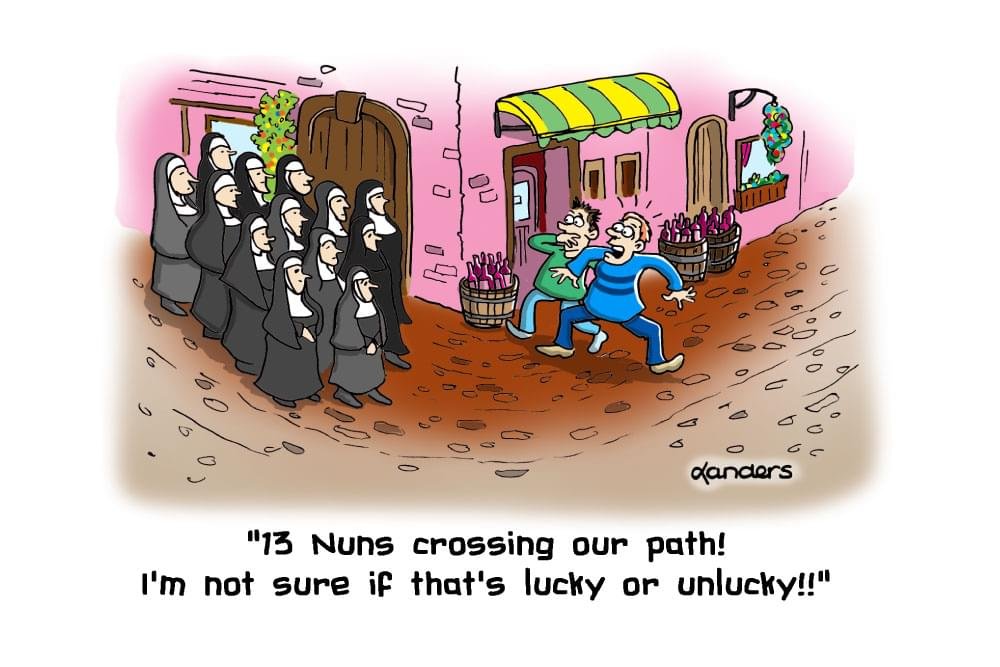
Finally, at the mention of old habits, in Italy it is believed to be very, very bad luck to have a group of nuns cross your path. This I know to be absolutely true... and although it has been many years, I am certain that my former classmates of St. Ambrose High School would concur!
Frank Macri
Award-winning advertising professional (retired), living the sweet life in southern Italy.

Frank is an award-winning advertising professional, now retired, from Denver, Colorado who is living the sweet life in southern Italy. In addition to a successful career in advertising, he had stints as the owner of an old west saloon, a film and stage character actor, a certified Santa Claus and a university professor… all of which, he says, are “remarkably similar”.
He now focuses on traveling, honing his skills as an Italian chef, and writing about Italy as he and his charming wife, the ever lovely Ora, renovate their home in beautiful Basilicata.
Their journey back to Italy started 100 years ago when their ancestors first arrived in the United States. Frank and his wife had dreamed of completing the circle of immigration by returning to their ancestral roots in southern Italy.
Their collective memories of the traditions, values and Italian lifestyle drew Frank and his wife back many, many times until they finally bought their house in Italy and moved there permanently.
In honor of the past, and in anticipation of the future, their lovely home is named “La Casa Cent’anni” (The Hundred Years House). “Cent’anni” is also a celebratory toast of goodwill.
So, “Cent’anni” to you, and to us, and to the next 100 years!
Contact: fmacri@abadvert.com · Frank Macri on Facebook