
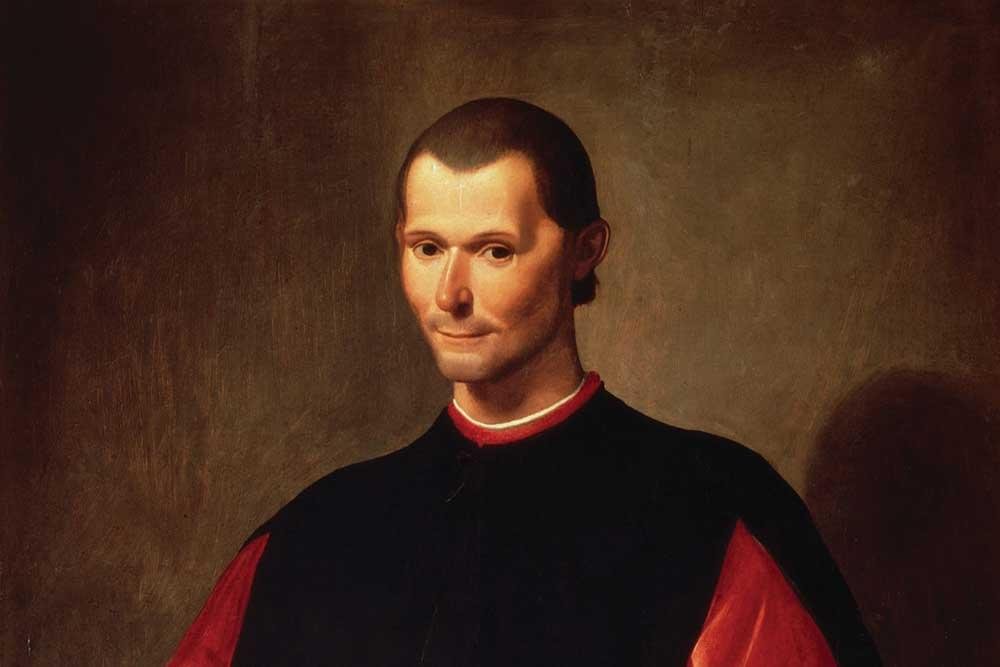
Niccolò Machiavelli
Niccolò Machiavelli, the renowned Italian Renaissance political philosopher and statesman, remains one of history's most influential and controversial figures. Best known for his treatise "The Prince," Machiavelli's works have shaped the landscape of political theory and continue to provoke debate and discussion. This comprehensive article delves into the life of Niccolò Machiavelli, his significant contributions to political philosophy, the context in which he wrote, and his enduring legacy.
Early Life and Education
Niccolò di Bernardo dei Machiavelli was born on May 3, 1469, in Florence, Italy, to a relatively well-off family with modest means. His father, Bernardo di Niccolò Machiavelli, was a lawyer with a deep interest in humanistic studies. Despite the family's limited financial resources, Bernardo's status allowed Niccolò access to an extensive collection of books and manuscripts, fostering his son's intellectual growth from a young age.
Machiavelli's education likely included Latin, grammar, rhetoric, and classical studies. He was particularly influenced by the works of ancient Roman and Greek authors, which shaped his understanding of politics, history, and philosophy. The political instability and shifting power dynamics of Renaissance Italy also played a crucial role in forming his perspectives on governance and statecraft.
Political Career
Machiavelli's career in public service began in 1498 when he was appointed as the Second Chancellor of the Republic of Florence, following the expulsion of the Medici family and the establishment of a republican government. In this role, Machiavelli was responsible for diplomatic missions and military affairs, giving him firsthand experience in the intricacies of political maneuvering and statecraft.
During his tenure, Machiavelli traveled extensively on diplomatic missions to various European courts, including those of France, Spain, and the Holy See. These experiences exposed him to different political systems and the often ruthless nature of political power. His observations during these missions significantly influenced his later writings, particularly "The Prince."
One of Machiavelli's notable achievements was his role in organizing a citizen militia in Florence, which he believed would be more loyal and effective than relying on mercenary forces. Although the militia had some initial success, it ultimately failed to defend Florence from external threats, leading to Machiavelli's fall from political favor.
The Fall of the Republic and Machiavelli's Exile
In 1512, the Medici family regained control of Florence with the support of Pope Julius II. The return of the Medici marked the end of the republican government, and Machiavelli, a staunch supporter of the republic, found himself on the losing side. Accused of conspiracy against the Medici, he was arrested, tortured, and subsequently exiled to his family estate at Sant'Andrea in Percussina, near Florence.
Machiavelli's forced retirement from political life was a significant turning point. Stripped of his official duties, he turned to writing as a means of channeling his political ideas and experiences. It was during this period of exile that Machiavelli composed his most famous works, including "The Prince" and the "Discourses on Livy."
"The Prince": A Revolutionary Treatise
"The Prince" (Il Principe), written in 1513 and published posthumously in 1532, is undoubtedly Machiavelli's most renowned work. The treatise is dedicated to Lorenzo de' Medici, in the hope of securing Machiavelli's return to political favor. "The Prince" offers pragmatic advice on ruling and maintaining power, often advocating for realpolitik and the use of cunning, manipulation, and, when necessary, cruelty.Key Themes and Concepts in "The Prince":
1.Virtù and Fortuna:
Machiavelli introduces the concepts of virtù (a ruler's ability to shape his destiny through strength, cunning, and decisiveness) and fortuna (the unpredictable forces of chance and luck). He argues that successful rulers must possess virtù to navigate the capricious nature of fortuna.
2.The Ends Justify the Means:
One of the most controversial aspects of "The Prince" is Machiavelli's assertion that the ends justify the means. He suggests that rulers must be willing to employ unethical or immoral tactics if they are necessary to maintain power and achieve their goals.
3.The Role of Fear and Love:
Machiavelli famously contends that it is better for a ruler to be feared than loved if he cannot be both. He believes that fear is a more reliable means of maintaining control, as love is fickle and can wane in times of adversity.
4.The Importance of Appearances:
Machiavelli emphasizes the significance of appearances and public perception. He advises rulers to cultivate an image of virtue and morality while being willing to act ruthlessly behind the scenes.
"The Prince" shocked contemporary readers with its candid and often cynical view of political power. Machiavelli's willingness to separate politics from ethics and his pragmatic approach to governance earned him both admiration and condemnation. The term "Machiavellian" has since become synonymous with political deceit and manipulation, though this characterization oversimplifies his complex thought.
"Discourses on Livy": Republican Ideals
While "The Prince" focuses on the acquisition and maintenance of power by individual rulers, Machiavelli's "Discourses on Livy" (Discorsi sopra la prima deca di Tito Livio) explores broader themes of republican governance and civic virtue. Written between 1517 and 1519, the "Discourses" draw on the history of the Roman Republic as chronicled by the ancient historian Livy.Key Themes and Concepts in the "Discourses on Livy":
1.Republicanism and Mixed Government:
Machiavelli advocates for a mixed government that balances the interests of the monarchy, aristocracy, and the common people. He argues that such a system promotes stability and prevents any one group from gaining too much power.
2.The Role of the People:
Contrary to the perception of Machiavelli as solely a proponent of autocratic rule, the "Discourses" highlight his belief in the importance of popular participation in governance. He praises the Roman Republic for its inclusion of the people in political decision-making and its system of checks and balances.
3.Civic Virtue and Corruption:
Machiavelli stresses the importance of civic virtue and the dangers of corruption. He believes that the strength of a republic lies in the virtue of its citizens and their willingness to prioritize the common good over personal interests.
4.The Cycle of Political Change:
Machiavelli outlines a cyclical theory of political change, where governments transition through stages of growth, maturity, decline, and renewal. He argues that the ability to adapt and reform is crucial for the longevity of a political system.
The "Discourses on Livy" provide a more comprehensive view of Machiavelli's political philosophy, revealing his admiration for republican ideals and his belief in the potential for collective governance. Together with "The Prince," the "Discourses" showcase the duality of Machiavelli's thought, balancing pragmatism with a vision of civic virtue.
Other Works and Contributions
In addition to "The Prince" and the "Discourses on Livy," Machiavelli authored several other notable works that contribute to his legacy as a political thinker and historian:
1.The Art of War (Dell'arte della guerra):
Written in 1521, "The Art of War" is a treatise on military strategy and tactics. Unlike his other works, it is presented as a dialogue and emphasizes the importance of discipline, training, and the integration of military and political objectives.
2.Florentine Histories (Istorie Fiorentine):
Commissioned by Giulio de' Medici, the "Florentine Histories" chronicle the history of Florence from its origins to Machiavelli's own time. The work reflects his deep understanding of Florentine politics and his ability to analyze historical events with a critical eye.
3.Mandragola:
Machiavelli also ventured into literature, writing the comedic play "Mandragola" (The Mandrake) around 1518. The play, which satirizes the moral and social mores of the time, showcases his wit and keen observation of human behavior.
Machiavelli's Legacy and Influence
Niccolò Machiavelli's impact on political thought and philosophy cannot be overstated. His works have inspired countless political leaders, thinkers, and scholars, shaping the discourse on power, governance, and human nature. Despite the controversy surrounding his name, Machiavelli's ideas have endured and continue to resonate in contemporary political theory.Key Aspects of Machiavelli's Legacy:
1.Realpolitik and Political Realism:
Machiavelli is often credited with founding the tradition of political realism, which emphasizes the pragmatic and often ruthless pursuit of power. His ideas have influenced modern political thinkers such as Thomas Hobbes, Friedrich Nietzsche, and Max Weber.
2.Secularism in Politics:
Machiavelli's separation of politics from ethics and religion was groundbreaking. He argued that political action should be judged by its effectiveness rather than moral or religious standards, laying the groundwork for secular political theory.
3.Modern Political Science:
Machiavelli's analytical approach to politics and his emphasis on empirical observation have contributed to the development of modern political science. His works continue to be studied in academic institutions worldwide, providing valuable insights into the nature of power and governance.
4.Cultural Impact:
Beyond political theory, Machiavelli's influence extends to literature, film, and popular culture. His name has become synonymous with cunning and strategic manipulation, reflecting the lasting impression of his ideas on the collective imagination.
Conclusion
Niccolò Machiavelli, the Prince of Political Thought, remains a towering figure in the history of political philosophy. His works, characterized by their incisive analysis and unflinching realism, have shaped our understanding of power, governance, and human nature. From his early life in Florence to his forced exile and prolific writing career, Machiavelli's journey reflects the tumultuous political landscape of Renaissance Italy and his enduring quest to comprehend and master the art of statecraft.
Whether admired for his intellectual brilliance or criticized for his perceived cynicism, Machiavelli's legacy endures as a testament to the complexity of political life and the timeless relevance of his insights. As we continue to navigate the intricacies of modern governance, Machiavelli's teachings remind us of the enduring challenges and dilemmas that define the pursuit of power.


