Of all the great artists Italy has produced, perhaps the most outstanding and interesting of them all is Giotto di Bondone. Born in Vespignano, near Florence in 1266, the son of a blacksmith, he lived to the ripe old age of 70, and died in 1336 in his native city, revered for his great achievements. At age 10, it is believed he was discovered by Cimabue, a noted artist of the time, who took him to Florence to study art. His earliest work may have been connected with the making of mosaics for the Florence Baptistry.
Although scholars and critics argue about Giotto’s stature as an innovator, even today, the testimony of his contemporaries, recorded for posterity, seem to prove that he was, indeed, a revolutionary and innovator. To gaze at a Giotto painting is to recognize the great leap he made from the idealized style of the medieval age, to the greater naturalism of the Early Rennaissance, thereby paving the way for all that came after. (Compare the two paintings of ‘The Crucifix’, the first attributed to Cimabue, in S. Croce, Florence, and the second attributed to Giotto, in S. Maria Novella. Florence, to see the full impact of this great leap). Giotto’s groupings have depth and conviction – the figures really seem to exist in their particular setting, and the figures themselves look extraordinarily modern, full of life and humanity, with their intense expressions and involvement with the scene.
Although Giotto painted many religious subjects, he also ventured into the secular with his personification of the Vices and Virtues, and depictions of non-religious events. Renowned for his powers of observation and subtlety – for instance, in his painting The Baptism of Jesus’ the usually soft and wavy hair of Christ is shown straight and plastered to his head by the water, and a well-known cleric painted with a receding hairline is shown to be quite bald when painted ten years later. Such detail was unknown in the previous medieval era. Giotto was obviously well aware of the world around him, and often included many species of tiny plants, as well as a depiction of Halley’s Comet in ‘The Adoration of the Magi’.

The Adoration of the Magi
Giotto, Public domain, via Wikimedia Commons
This remarkable artist also displayed a unique sense of humour and subtle wit, which was most unusual in paintings of that time. When we consider what a devastating century the fourteenth was in Italy, with its wars, hunger, pestilence and death, the wonder is that anyone found anything at all to smile about. On the other hand, perhaps the need for humour is even greater in times of fear, anguish and pain, in order to restore and revitalize the human spirit. This was certainly evident in the literature of the time, as The Decameron by Boccaccio, written in 1350, and the Trecentonovelle, by Franco Sacchetti, written around 1390, clearly illustrate. Both these well know works are full of jokes and bawdy tales, encompassing the whole of medieval society, including churchmen from lowly friars to popes. It was quite acceptable then, to poke fun at the grotesque, and even at deformity and disability.
Giotto’s humour, however, was more subtle, being closer to wit and satire, than to buffoonery or vulgarity. An example of this can be seen in his painting ‘The Wedding Feast at Cana’ – a solemn, dignified scene, where the haloed figures on the far left are contrasted with the figure of a wine steward on the right, pot-bellied and oafish, who is holding a large wine goblet up to his lips. He has obviously been drinking copiously himself, and looks unsteady on his feet as a result. Such a contrast does not undermine the dignity of the scene, but rather emphasises it.

Marriage at Cana
Giotto, Public domain, via Wikimedia Commons
Another example of Giotto’s satiric humour can be seen in a small panel hidden away over a disused passage in the Arena Chapel in Padua. It depicts two half-figures, both crowned, and no doubt full of self-importance. The woman is holding a book, but she cannot read it because her eyes are blocked by protruding clubs. The man, brutish and wild, wears an animal skin and holds a similar club over one shoulder. She has acquired learning, but cannot use it, whereas he represents the lack of learning but still thinks himself noble. With both these figures, Giotto makes clear the fundamental flaw of folly, blind ignorance.
We can also see a more gentle humour in Giotto’s depictions of Joseph, the husband of Mary. Aware of his age, and as he believes, his unsuitability, he is always hiding in the background, so as not to be singled out, but he is ultimately chosen, over and above the younger men who proffer themselves for the privilege in ‘The Collection of the Rods’ Then, in the painting of ‘The Flight Into Egypt’ Joseph is seen frowning at the young man who is leading the donkey, as if he resents his energy and youth compared with his own weariness and fatigue. In this way Giotto reveals his great insight into human feeling, and his preoccupation with the inner life and not just outward appearance.

Flight into Egypt
Giotto, Public domain, via Wikimedia Commons
The depiction of angels in Giotto’s paintings, are innocent and childlike, no doubt informed by observation of his own children, and the same applies to the depiction of animals, but these images are considered to be more playful than humorous.
Like all medieval and renaissance artists, Giotto relied on patrons to commission his work, and his fame ensured that he was never short of these, usually juggling a great many at the same time. In order to cope with it all, he ran several workshops in different cities, and there is no doubt that much of the painting was done by his employees and pupils. But the master would supervise and guide the whole enterprise, put the finishing touches himself, and be responsible for the completion and quality of the work.
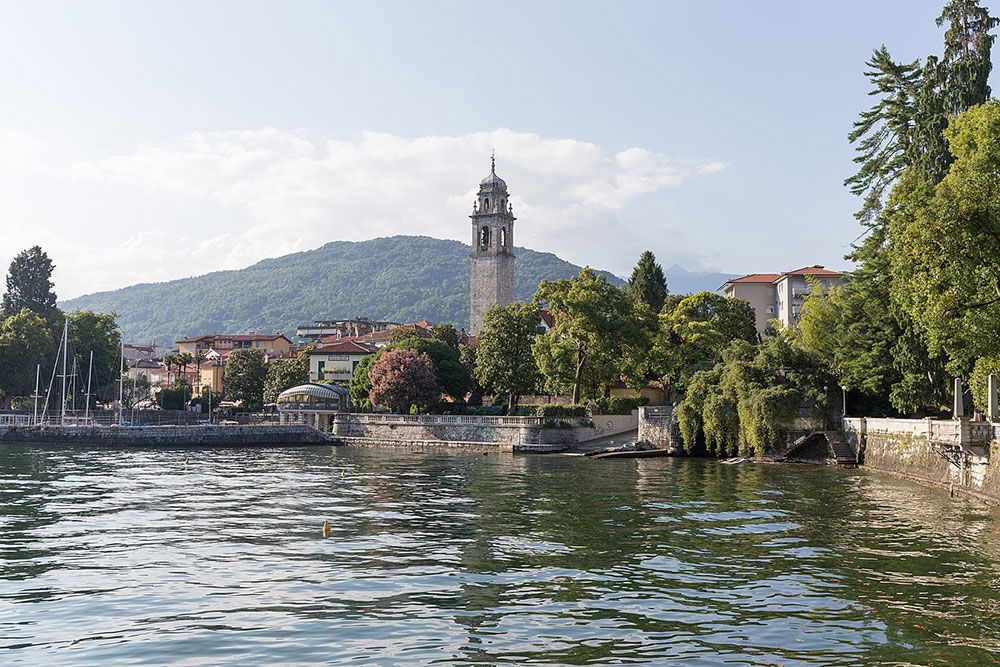
Giotto travelled a great deal throughout Italy in his lifetime, but ultimately his reputation and achievements caused the civic officials in Florence to lure him back to his native city, where it is believed his last commission was the design of the Campanile, or bell tower. When he died in 1336, he was buried in the cathedral, clear evidence of the great esteem and honour in which he was held.





.jpg)