Skip to content
Nation / Famous Italians / Sport / Motorsport / Nino Farina
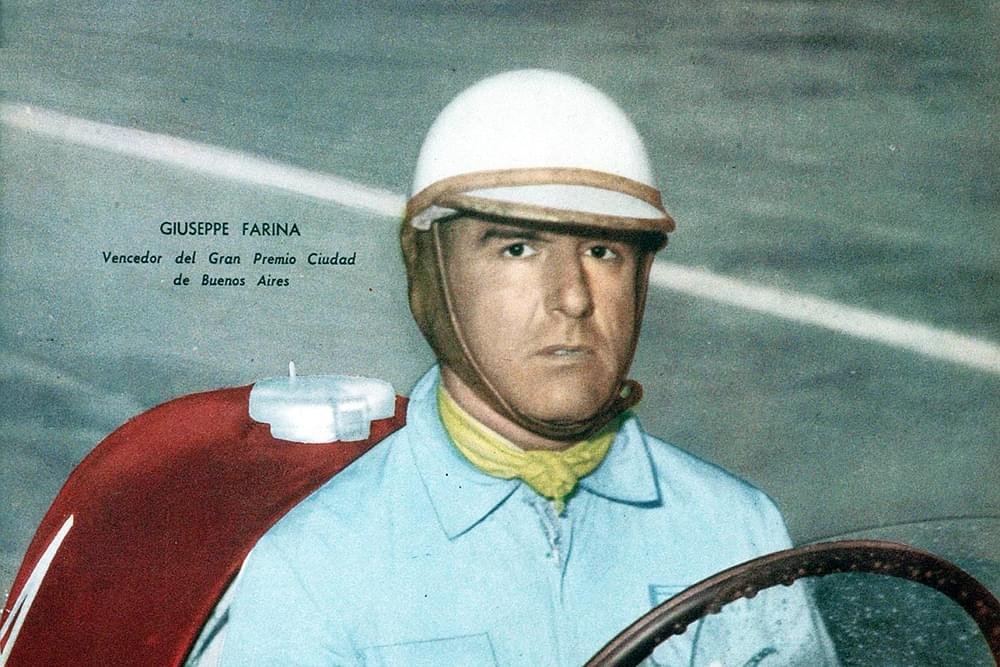
Giuseppe 'Nino' Farina
Agence de presse Meurisse, Public domain, via Wikimedia Commons

Giuseppe 'Nino' Farina

Published:

In the annals of motorsport history, few names resonate with the pioneering spirit and sheer determination of Emilio Giuseppe "Nino" Farina, the first-ever Formula One World Champion. Born in Turin, Italy, on October 30, 1906, Farina's racing career spanned a transformative era in auto racing, from the early days of Grand Prix racing to the dawn of the Formula One World Championship. This article delves into the life, career, and enduring legacy of Nino Farina, a true icon of motorsport.

Early Life and Path to Racing

Farina was born into an automotive world; his father was the founder of the Stabilimenti Farina coachbuilding company, setting the stage for Nino's lifelong association with cars. Farina's early exposure to automobiles ignited a passion for speed and mechanics, leading him to pursue a degree in engineering from the Polytechnic University of Turin. His academic prowess and innate understanding of vehicle dynamics laid the groundwork for his future in racing.

Farina's racing debut came in 1932, and his natural talent behind the wheel quickly became apparent. His early career was marked by a series of impressive performances in various European races, driving for Alfa Romeo. Farina's aggressive driving style, characterized by his ability to push cars to their limits while maintaining control, set him apart from his contemporaries.

Rise to Prominence

The pre-war era saw Farina emerge as a formidable competitor in Grand Prix racing. He secured numerous victories and podium finishes, establishing himself as a leading figure in international motorsport. However, it was in the post-war period, with the establishment of the Formula One World Championship in 1950, that Farina's racing career reached its zenith.

Farina participated in the inaugural Formula One season, driving for the Alfa Romeo team. His blend of technical knowledge, driving skill, and tactical acumen was perfectly suited to the demands of Formula One racing. On May 13, 1950, at the British Grand Prix held at Silverstone, Farina won the first-ever World Championship Formula One race, setting the stage for a historic season.

The 1950 World Championship

The 1950 Formula One season is etched in history, not just for its status as the inaugural championship but also for Farina's remarkable performances. Throughout the season, Farina's rivalry with his teammates, Juan Manuel Fangio and Luigi Fagioli, captivated racing fans. Their battles on the track were fierce, showcasing the pinnacle of racing talent and strategy of that era.

Farina's consistency and prowess culminated at the Italian Grand Prix, where he clinched the victory that secured him the first Formula One World Championship. This monumental achievement was a testament to Farina's skills, determination, and the technological superiority of the Alfa Romeo team.

Legacy and Impact on Motorsports

Nino Farina's influence on motorsport extends far beyond his 1950 World Championship title. He was a pioneer in the truest sense, setting standards in driving technique, race preparation, and vehicle setup that would influence generations of racers. Farina's approach to racing, combining engineering knowledge with daring on-track maneuvers, exemplified the evolution of the driver from mere operator to integral part of the racing team's success.

Farina's career also highlighted the dangers of early motorsport. He survived several serious accidents, underscoring the risks that drivers of his era faced. Farina's resilience and continued pursuit of racing excellence, even in the face of such dangers, added to his legend and underscored the courage required to compete at the highest levels of motorsport.

The Final Years and Farina's Enduring Influence

After retiring from racing in 1955, Farina continued to be involved in the automotive world, sharing his knowledge and passion for the sport. His death in a car accident in 1966 was a tragic end to a life that had been so intimately connected with automobiles and racing. Yet, Farina's legacy lives on, remembered not only for his championship but also for his role in shaping Formula One into the premier class of motor racing.

Nino Farina's story is a compelling chapter in the history of Formula One, marking the dawn of a new era in motorsport. His achievements laid the foundation for the global spectacle that Formula One has become, inspiring countless individuals to pursue their passion for racing. Farina's blend of technical acumen, fearless

Nation Dossier

Flag of Italy

Italy

A compact nation-state reference: scale, structure, capability, and performance — designed to sit beneath articles.

Governance Economy Made in Italy Performance
Italy — national feature image
Italy at a glance — then the bigger picture: what shaped the state, how it works, what it produces, and where it stands.

Italy — global snapshot

Stable reference signals for quick orientation.

Area

301,340 km²

Covers a long peninsula extending into the Mediterranean, plus two major islands — Sicily and Sardinia — and numerous smaller island groups. The geography includes alpine regions, fertile plains, volcanic zones, and extensive coastline, shaping settlement, climate, and transport patterns.

Population

~59 million

One of the largest populations in the European Union, with density concentrated in urban and northern regions. Long-term demographic trends include low birth rates, population ageing, and increasing reliance on inward migration for workforce balance.

Coastline

~7,600 km

A predominantly maritime nation bordered by the Tyrrhenian, Adriatic, Ionian, and Ligurian seas. The extended coastline supports ports, tourism, fisheries, naval infrastructure, and a long-standing seafaring and trading tradition.

UNESCO sites

61

The highest number of UNESCO World Heritage Sites globally, spanning ancient cities, archaeological landscapes, historic centres, and cultural routes. This reflects Italy’s layered civilisations and the density of preserved cultural assets across its territory.

Currency

Euro (EUR)

Member of the Eurozone, with monetary policy set at European Central Bank level. Use of the euro facilitates trade, investment, and financial integration across the EU single market.

Time

CET / CEST

Operates on Central European Time, with daylight saving applied seasonally. The time zone aligns Italy with major European capitals, supporting coordination in business, transport, and broadcasting.

Tourism

~50–65M

Among the world’s most visited countries, attracting visitors for heritage cities, landscapes, cuisine, and lifestyle. Tourism is economically significant but regionally uneven, with strong seasonal concentration in major destinations.

Global role

G7

A founding member of the European Union and a permanent participant in G7 coordination. Italy’s influence is exercised through diplomacy, industrial capability, cultural reach, and multilateral institutions.

Governance

A layered republic

A parliamentary republic with powers and delivery spread across state, regions, and comuni — which is why outcomes can vary by territory.

Economy

Diversified, export-capable

Services dominate overall output, while manufacturing remains a defining strength through specialised clusters and global supply chains.

Made in Italy

Quality as an ecosystem

Design, craft, engineering, and brand power — often delivered by small and mid-sized firms rooted in local capability.

Performance

Strengths with constraints

World-class sectors alongside long-running challenges: uneven productivity, demographic pressure, administrative complexity, and fiscal limits.

Italy governance
Governance
Italy economy
Economy
Made in Italy
Made in Italy
Italy performance
Performance
Italy history

History

From unification to a modern republic

Modern Italy is a relatively young nation-state built from older city-states, kingdoms, and strong regional identities. Unification created the national framework, but local character remained powerful — shaping language, administration, and culture across the peninsula. The post-war republic rebuilt institutions, expanded democratic participation, and redefined the state’s relationship with citizens through welfare, education, and public infrastructure. European integration then anchored Italy within shared rules and markets, while the late 20th and 21st centuries have focused on balancing growth, reform, and cohesion in a complex, decentralised country.

Italy contribution and influence

Contribution

Europe, culture, industry

Italy’s contribution travels through EU participation, diplomacy, research networks, industrial capability, and cultural reach. In practice, influence is often most visible through specific strengths: design and heritage leadership, advanced manufacturing and specialist supply chains, food and agricultural standards, and world-class tourism and creative industries. Italy also plays a sustained role in Mediterranean and European stability through alliances, humanitarian operations, and institutional cooperation. Rather than a single narrative, Italy’s global presence is best understood as a portfolio of high-impact domains where craft, identity, and technical competence combine.