Skip to content
Nation / Famous Italians / Architecture / Renzo Piano
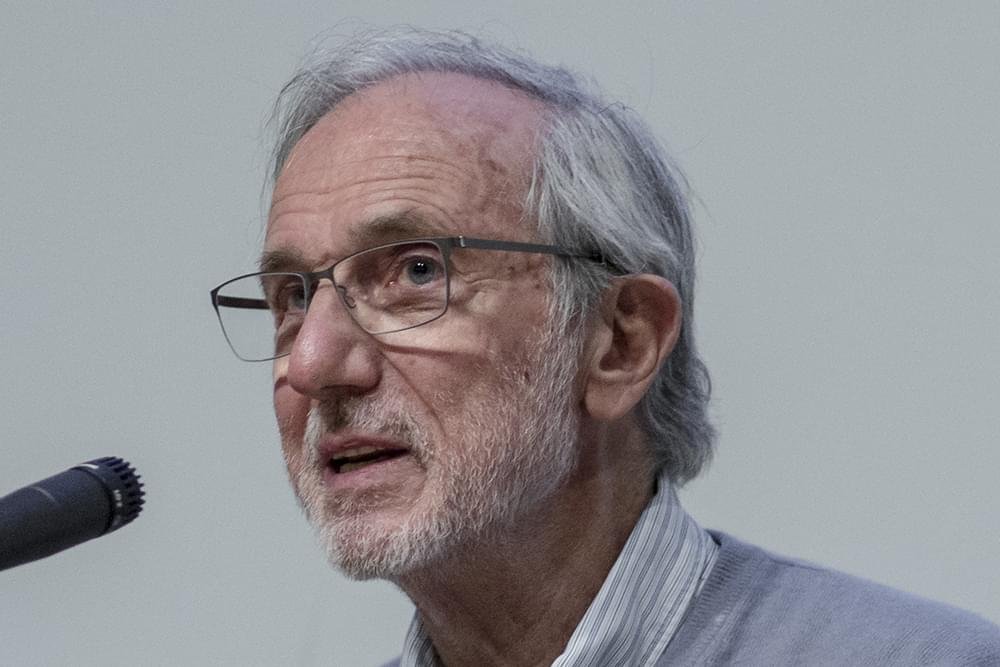
Renzo Piano
Columbia GSAPP, CC BY 2.0 <https://creativecommons.org/licenses/by/2.0>, via Wikimedia Commons

Renzo Piano

Published:

This was the Pritzker Prize jury's citation when the prestigious award was bestowed on Renzo Piano in 1998.

"The array of buildings by Renzo Piano is staggering in scope and comprehensive in the diversity of scale, material, and form. He is truly an architect whose sensibilities represent the widest range of this and earlier centuries."


Renzo Piano was born in Genoa, Italy in 1937. His grandfather, his father, four uncles and a brother were all building contractors. Piano's upbringing in a family of builders has fostered a unique passion and understanding for construction. During his studies he worked under Franco Albini, a prominent Italian architect and designer. Following his graduation from Milan Polytechnic Architecture School in 1964, he worked in his father's construction company. From 1965-70 Piano worked for Louis Kahn in Philadelphia, and Z. S. Makowsky in London.

His first important solo commission was in 1969 to design the Italian Industry Pavilion at Expo 1970 in Osaka. The Expo project was well received by the public and critics. A young English architect named Richard Rogers was also impressed. Piano and Rogers found they had a lot in common and subsequently form a practice together (1970-77). Their most famous project is the Georges Pompidou Centre in Paris. The building received resounding critical acclaim and made Rogers and Piano household names.

In 1981, Piano founded the Renzo Piano Building Workshop, which today employs 150 people and maintains offices in Paris, Genoa, and New York City. Renzo Piano 's work includes more than 40 projects worldwide. These projects include many civic buildings: museums, galleries, churches etc, urban design projects (Potsdamer Platz master plan, Berlin, Germany ), skyscrapers (The Shard, London), airports, stadiums and many more.

Renzo Piano continues to be one of the 21st centuries most prolific and lauded architects. His work has received much critical acclaim, and he has been the recipient of many prestigious architectural awards and prizes.

A few Renzo Piano projects:

  • IRCAM & the Centre Georges Pompidou, Paris, France (1977)
  • IBM Travelling Pavilion, (1984)
  • Banca CIS building, Cagliari, Sardinia, Italy (1985)
  • Menil Collection, Houston, Texas, United States (1987)
  • Stadio San Nicola, Bari, Italy (1989)
  • International Terminal, Kansai International Airport, Osaka, Japan (1994)
  • Cy Twombly Gallery, Houston, Texas, United States (1995)
  • Ushibuka Haiya Bridge, Amakusa, Japan (1997)
  • Beyeler Foundation Museum, Basel, Switzerland (1997)
  • NEMO science museum, Amsterdam, Netherlands (1997)
  • Ferrari wind tunnel, Maranello, Italy (1998)
  • Jean-Marie Tjibaou Cultural Center, Nouméa, New Caledonia (1998)
  • Aurora Place, Sydney, Australia (2000)
  • Potsdamer Platz master plan, Berlin, Germany (2000)
  • Auditorium Paganini, Parma, Italy (2001)
  • Parco della Musica, Rome, Italy (2002)
  • Padre Pio Pilgrimage Church, San Giovanni Rotondo, Italy (2004)
  • Il Sole 24 Ore headquarters, Milan, Italy (2004)
  • Cité Internationale, Lyon, France (2006)
  • Vulcano Buono, Nola, Italy (2007)
  • The New York Times Building, New York City, United States (2007)
  • Rocca di Frassinello Winery, Gavorrano, Italy (2007)
  • Saba building , Mashhad , Iran (2007)
  • Central Saint Giles, London, United Kingdom (2010)
  • The Shard, London, United Kingdom (2012)

Awards:

  • Royal Gold Medal, 1989
  • Cavaliere di Gran Croce Ordine al Merito della Repubblica Italiana, 1990
  • Kyoto Prize, 1990
  • Italian Order of Merit for Culture and Art, 1994
  • Pritzker Architecture Prize, 1998
  • AIA Gold Medal, 2008
  • Sonning Prize, 2008.

Nation Dossier

Flag of Italy

Italy

A compact nation-state reference: scale, structure, capability, and performance — designed to sit beneath articles.

Governance Economy Made in Italy Performance
Italy — national feature image
Italy at a glance — then the bigger picture: what shaped the state, how it works, what it produces, and where it stands.

Italy — global snapshot

Stable reference signals for quick orientation.

Area

301,340 km²

Covers a long peninsula extending into the Mediterranean, plus two major islands — Sicily and Sardinia — and numerous smaller island groups. The geography includes alpine regions, fertile plains, volcanic zones, and extensive coastline, shaping settlement, climate, and transport patterns.

Population

~59 million

One of the largest populations in the European Union, with density concentrated in urban and northern regions. Long-term demographic trends include low birth rates, population ageing, and increasing reliance on inward migration for workforce balance.

Coastline

~7,600 km

A predominantly maritime nation bordered by the Tyrrhenian, Adriatic, Ionian, and Ligurian seas. The extended coastline supports ports, tourism, fisheries, naval infrastructure, and a long-standing seafaring and trading tradition.

UNESCO sites

61

The highest number of UNESCO World Heritage Sites globally, spanning ancient cities, archaeological landscapes, historic centres, and cultural routes. This reflects Italy’s layered civilisations and the density of preserved cultural assets across its territory.

Currency

Euro (EUR)

Member of the Eurozone, with monetary policy set at European Central Bank level. Use of the euro facilitates trade, investment, and financial integration across the EU single market.

Time

CET / CEST

Operates on Central European Time, with daylight saving applied seasonally. The time zone aligns Italy with major European capitals, supporting coordination in business, transport, and broadcasting.

Tourism

~50–65M

Among the world’s most visited countries, attracting visitors for heritage cities, landscapes, cuisine, and lifestyle. Tourism is economically significant but regionally uneven, with strong seasonal concentration in major destinations.

Global role

G7

A founding member of the European Union and a permanent participant in G7 coordination. Italy’s influence is exercised through diplomacy, industrial capability, cultural reach, and multilateral institutions.

Governance

A layered republic

A parliamentary republic with powers and delivery spread across state, regions, and comuni — which is why outcomes can vary by territory.

Economy

Diversified, export-capable

Services dominate overall output, while manufacturing remains a defining strength through specialised clusters and global supply chains.

Made in Italy

Quality as an ecosystem

Design, craft, engineering, and brand power — often delivered by small and mid-sized firms rooted in local capability.

Performance

Strengths with constraints

World-class sectors alongside long-running challenges: uneven productivity, demographic pressure, administrative complexity, and fiscal limits.

Italy governance
Governance
Italy economy
Economy
Made in Italy
Made in Italy
Italy performance
Performance
Italy history

History

From unification to a modern republic

Modern Italy is a relatively young nation-state built from older city-states, kingdoms, and strong regional identities. Unification created the national framework, but local character remained powerful — shaping language, administration, and culture across the peninsula. The post-war republic rebuilt institutions, expanded democratic participation, and redefined the state’s relationship with citizens through welfare, education, and public infrastructure. European integration then anchored Italy within shared rules and markets, while the late 20th and 21st centuries have focused on balancing growth, reform, and cohesion in a complex, decentralised country.

Italy contribution and influence

Contribution

Europe, culture, industry

Italy’s contribution travels through EU participation, diplomacy, research networks, industrial capability, and cultural reach. In practice, influence is often most visible through specific strengths: design and heritage leadership, advanced manufacturing and specialist supply chains, food and agricultural standards, and world-class tourism and creative industries. Italy also plays a sustained role in Mediterranean and European stability through alliances, humanitarian operations, and institutional cooperation. Rather than a single narrative, Italy’s global presence is best understood as a portfolio of high-impact domains where craft, identity, and technical competence combine.