
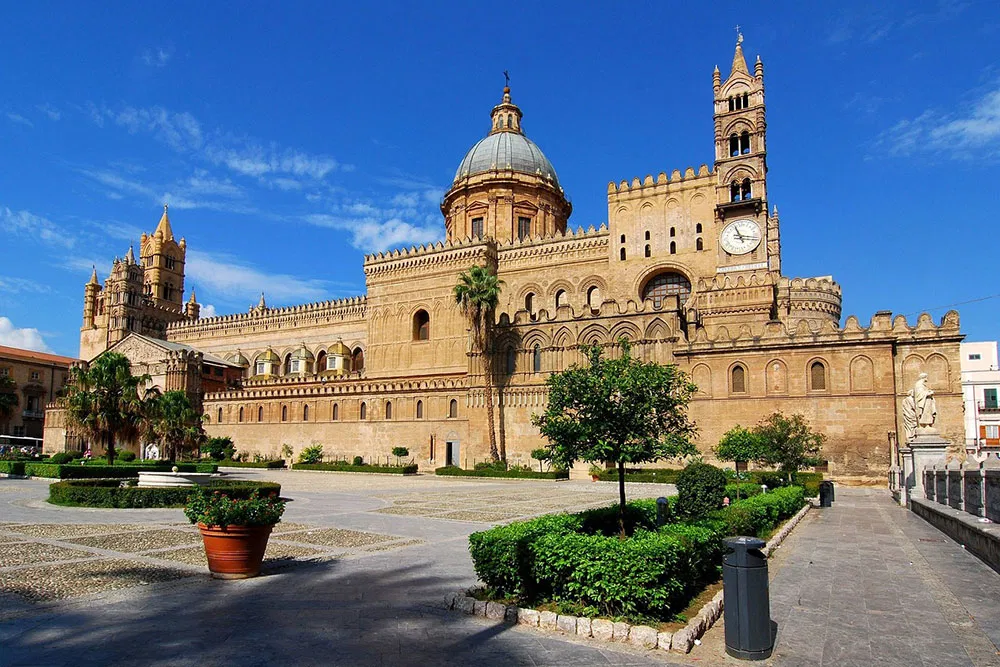
Palermo Cathedral
Palermo Cathedral, known as *Cattedrale di Palermo* in Italian, stands as a testament to Sicily’s complex and multicultural history. Located in the heart of Palermo, the island’s vibrant capital, this majestic structure reflects centuries of conquests, religious influences, and artistic evolution. With its fascinating blend of Norman, Arab, Gothic, Renaissance, and Baroque architectural styles, the cathedral is not only a religious landmark but also a cultural treasure.
A Brief History of Palermo Cathedral
The origins of Palermo Cathedral date back to 1185, when it was commissioned by Archbishop Walter of the Mill, during the reign of King William II of Sicily. However, its location was already significant long before the cathedral was built. The site was originally home to a Punic-Roman temple, later transformed into a Byzantine church and then into a mosque during the Arab rule of Sicily (9th–11th century).
When the Normans conquered Palermo in 1072, they reclaimed the mosque and re-established Christian rule. The cathedral, as we see it today, has undergone numerous renovations and expansions over the centuries, each leaving its mark on the building’s design.
Architectural Wonders of Palermo Cathedral
One of the most captivating aspects of Palermo Cathedral is its eclectic architecture, which reflects the diverse civilizations that have ruled Sicily.
The Exterior: A Harmony of Styles
The façade is an extraordinary blend of Norman, Moorish, and Gothic influences. The Arab-Norman arches, intricate carvings, and pointed windows showcase the Islamic and medieval Christian architectural fusion.
The south portal, an impressive Gothic structure added in the 15th century, is one of the most detailed parts of the cathedral’s exterior. The main entrance, built in the late Renaissance period, features elegant Corinthian columns and a grand tympanum.
The bell towers, originally Norman, have been modified over time, incorporating Spanish and Baroque elements. The large dome, added in the 18th century, dominates the skyline and gives the cathedral a more classical appearance.
The Interior: A Sacred Treasure Trove
While the exterior is richly decorated, the interior of the cathedral is surprisingly simpler and more classical, reflecting the 18th-century renovations led by Italian architect Ferdinando Fuga. The wide nave, high ceilings, and clean lines contrast sharply with the elaborate façades.
One of the highlights inside is the Royal Tombs section, where some of the most important figures of Sicilian history rest.
The Royal Tombs: Resting Place of Sicilian Kings
Palermo Cathedral is famous for being the burial site of Norman and Swabian kings, including:
- Roger II (1095–1154) – The first King of Sicily and founder of the Norman Kingdom.
- Emperor Frederick II (1194–1250) – One of the most influential rulers of the Holy Roman Empire, known for his intellectual and military prowess.
- Henry VI – Holy Roman Emperor and father of Frederick II.
- Constance of Aragon – Queen of Sicily and mother of Frederick II.
The sarcophagi, crafted in fine porphyry, are among the most impressive funerary monuments in Italy. Visitors can admire the intricate carvings and inscriptions that honor these medieval rulers.
Other Highlights of Palermo Cathedral
The Treasury and Crown of Constance
One of the cathedral’s most fascinating sections is the treasury, where sacred relics, precious objects, and royal artifacts are displayed. The most famous item is the golden crown of Constance of Aragon, encrusted with gemstones and pearls, a masterpiece of medieval craftsmanship.
Crypts and Ancient Tombs
Beneath the cathedral lies the crypt, containing numerous tombs of archbishops and noble figures. Dating back to the early medieval period, this underground chamber gives insight into the cathedral’s long and sacred past.
Panoramic Views from the Cathedral Roof
For those who love breathtaking cityscapes, a climb to the cathedral’s roof terraces is a must. The panoramic views of Palermo’s historic center, Monte Pellegrino, and the Tyrrhenian Sea are simply unforgettable.
Visiting Palermo Cathedral: Essential Information
Opening Hours & Tickets
- Cathedral: Open daily, free entry.
- Royal Tombs, Treasury & Roof Access: Ticket required.
- Opening Hours: Usually from 9:00 AM to 5:30 PM, but times may vary.
How to Get There
Palermo Cathedral is centrally located on Corso Vittorio Emanuele, within walking distance of many other historical landmarks, such as the Palazzo dei Normanni and Quattro Canti. The nearest bus and train stations provide easy access for visitors.
Best Time to Visit
The best time to visit is spring or autumn, when the weather is mild, and the crowds are smaller. Avoid peak summer months if possible, as Palermo can be very hot.
Conclusion: Why Visit Palermo Cathedral?
Palermo Cathedral is more than just a church—it’s a living symbol of Sicily’s rich and layered history. From its Norman foundations to its Islamic influences, from the grandeur of its royal tombs to the stunning city views from its terraces, this architectural masterpiece offers a journey through centuries of art, power, and devotion.
A visit to Palermo is incomplete without stepping into this awe-inspiring monument, where every stone tells a story of conquest, faith, and beauty.


