
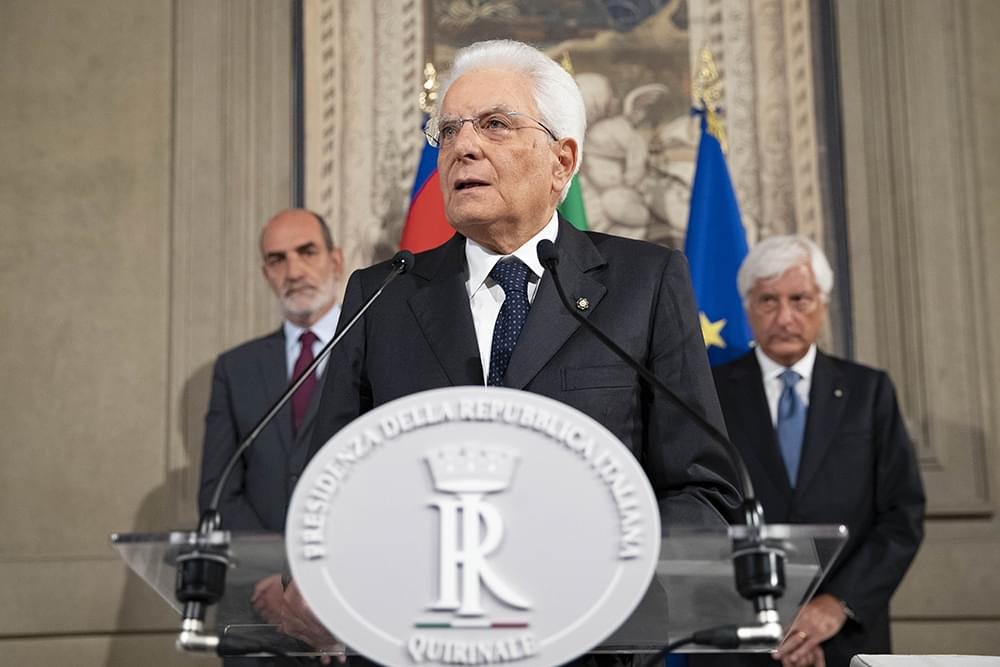
Sergio Mattarella
Sergio Mattarella, an eminent figure in Italian politics, has played a pivotal role in shaping Italy's political landscape and upholding its democratic values. Born on July 23, 1941, in Palermo, Italy, Mattarella's remarkable journey through politics, law, and leadership culminated in his election as the 12th President of the Italian Republic in 2015. This extensive article delves into the life, career, and lasting impact of Sergio Mattarella, a statesman known for his unwavering commitment to democracy, the rule of law, and the well-being of the Italian people.
Early Life and Education
Sergio Mattarella was born into a family deeply rooted in Italy's political and public service traditions. His father, Bernardo Mattarella, was a prominent Christian Democratic politician, instilling in Sergio the values of public service and the principles of democracy from a young age. His early exposure to politics and the law would significantly influence his future career choices.
Mattarella's educational journey laid the foundation for his lifelong commitment to the rule of law. He pursued a degree in law at the University of Rome, followed by a Ph.D. in law from the prestigious Sapienza University of Rome. His academic achievements not only honed his legal acumen but also kindled a passion for upholding justice and the principles of democracy.
Political Ascent
Sergio Mattarella's political ascent began in the 1980s when he was elected as a member of the Italian Parliament. Serving as a Member of Parliament for multiple terms, he gained a reputation for being a principled, intelligent, and fair-minded politician. His political ideology was firmly rooted in Christian Democracy, which emphasizes social justice and the values of the Christian faith. This commitment to his principles would guide him throughout his political career.
Ministerial Roles
During his time in Parliament, Mattarella held various ministerial roles, each contributing to his growth as a respected politician and statesman. Some of the key ministerial positions he held include:
Minister for Parliamentary Relations (1987-1989)
Mattarella's role as the Minister for Parliamentary Relations provided him with invaluable experience in understanding the inner workings of the Italian government and the intricacies of the legislative process.
Minister of Education (1989-1990)
As the Minister of Education, he was entrusted with the responsibility of shaping the country's educational policies, demonstrating his commitment to nurturing the minds of the next generation.
Minister of Defense (1999-2001)
Serving as the Minister of Defense, Mattarella assumed significant responsibilities in the realm of national security and defense policy, showcasing his versatility as a leader.
Throughout his ministerial career, Mattarella consistently demonstrated his dedication to the rule of law and the principles of democracy, earning the trust and respect of his colleagues and the Italian public.
Constitutional Court and Presidential Role
One of the pivotal moments in Sergio Mattarella's career came when he was appointed as a judge to the Italian Constitutional Court in 2011. As a member of the highest court in Italy, he played a critical role in upholding the Italian Constitution and ensuring the protection of individual rights and the rule of law. His tenure on the Constitutional Court further solidified his reputation as a legal luminary and a champion of constitutional values.
In January 2015, Sergio Mattarella was elected as the President of the Italian Republic, marking the pinnacle of his political career. In this prestigious role, he assumed the responsibility of representing the unity of the nation and safeguarding the constitution. His presidency began during a challenging period for Italy, with economic instability and political turbulence. Throughout his term, he played a vital role in maintaining political stability and upholding the principles of democracy.
Legacy
Sergio Mattarella's legacy as President is marked by his unwavering commitment to democracy, the rule of law, and the Italian Constitution. He possessed a remarkable ability to navigate the complexities of Italian politics and mediate during periods of political instability, earning him widespread respect.
As President, Mattarella consistently advocated for European unity and international cooperation, reflecting his belief in the power of diplomacy and collaboration. His presidency was marked by moments of great national significance, including his role in mediating the formation of a new government in 2018 after a contentious election, and his response to the COVID-19 pandemic in 2020.
Statesmanship and Diplomacy
Mattarella's statesmanship extended beyond Italy's borders. He played an active role in European and international affairs. Italy's position within the European Union and the United Nations was bolstered by Mattarella's diplomatic efforts. His commitment to multilateralism, sustainable development, and peacekeeping made Italy a key player on the global stage.
Conclusion
Sergio Mattarella's political career, which spanned several decades, showcases his dedication to democracy, the rule of law, and public service. From his early days in Parliament to his significant ministerial roles and, ultimately, his presidency, he consistently upheld the values and principles that underpin the Italian Republic.
Mattarella's legacy as a statesman of unwavering integrity, intelligence, and commitment to the welfare of Italy and its citizens will continue to influence and inspire future generations of leaders in Italy and beyond. His life story is a testament to the enduring power of public service and the significance of principled leadership in preserving the democratic ideals that have guided Italy for centuries. Sergio Mattarella has left an indelible mark on Italian politics and continues to be celebrated as a symbol of statesmanship and dedication to the common good.


