Skip to content
Tourism / Holidays in Italy / Cycling in Italy
Cycling in Italy

Cycling in Italy

Published:

Only cycling in Italy can take you from a stunning mountain climb to a quiet country road, along a car-free sandy coastline and into glitzy seaside resorts - all in the same day.

Italy’s appetite for cycling can be traced back to the beginning of the annual Giro d’Italia in 1909. Since then, the country has become known as the most popular cycling destination in Europe. The hobby is especially popular in Tuscany, Veneto and Lombardy.

The Mediterranean climate means cyclists can indulge all year round. Although, the months of April-May and September-October will ensure you don’t have to adapt too much to the weather. Water fountains can be found all over Italy, which is crucial for summer cyclists.

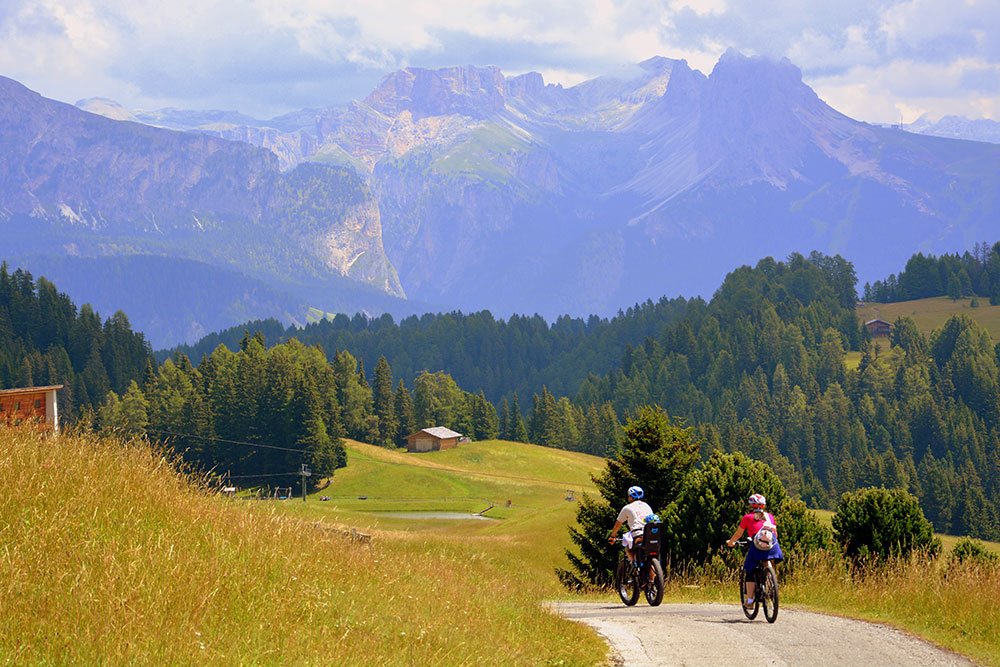
There’s no better place to begin your cycling journey than the location for the annual competition that started it all: the Dolomite National Park. Almost every road in the Dolomites is a well-ridden cycling route, taking the cyclist through incredible mountain scenery along a range of routes requiring different skill levels. Far more daring and experienced cyclists can try the Maratona dles Dolomites route, a tricky annual cycling race covering seven mountain passes.

Cyclists also have a worthy home in Tuscany. Tuscany, in central Italy, is home to many famous cyclists and Strade Bianche, the annual road bicycle race which takes in the white gravel roads of the Crete Senesin. In the countryside, marvel as you zip past olive groves and vineyards. Then take your throbbing legs to the healing waters of Ancient Roman hot springs Bagno Vignoni and Vivo d'Orcia.

Once you’ve cooled down, you can follow a coastal path to the Cinque Terre alongside the Ligurian and Tyrrhenian waters. This route from Levanto to La Spezia takes in a total of 40km. Or if you’re looking for something a lot quieter, the empty 159km Grand Tour della val di Merse will ensure you read in peace without bumping into a soul.

Similar solitary cycling can also be found along Liguria’s Cycling Riviera, an easy 24 km route down an old railway path - with no cars allowed. If you’d like to explore ancient Etruscan sites, caves and tunnels, Il Grand Tour della Maremma will help you to explore the ancient regions of Tuscany and Lazio. Be aware though, it takes you on over 5,000 km of elevation with some 20% inclines.

Elsewhere, the Italian lakes of Como and Garda offer fantastic cycling spots. The former features Passo del Ghisallo, a key hub for serious cyclists, as well as the Cycling Museum.

Il Lombardia is an annual 253km cycling race in Lombardy, departing from Bergamo and finishing in Como. It is a very demanding course, with very steep inclines and a thrilling sprint finish.

It is the second Italian race of ‘The Monuments’, five classic cycling races considered to be the most traditional, prestigious and toughest one-day events in the world of cycling. The other covers Milan to San Remo, a 115-year-old race referred to as La Primavera.

With masses of options in every region, there is no doubt Italy bike tours are the world’s number one choice for cycling.

Travel & Experience

Tourism icon

Tourism

A compact reference to how Italy is visited, experienced, and explored — across regions, seasons, and styles of travel — designed to sit beneath articles.

Destinations Activities Travel Stay
Italy tourism — landscapes and cities
Cities, coastlines, countryside, and culture — Italy as a destination shaped by geography, history, and lived experience.

Italy — tourism snapshot

Stable reference signals for quick travel orientation.

Peak season

Summer

Coastal and island demand concentrates in summer, while major cities attract visitors year-round. Shoulder seasons often deliver the best balance of weather, pricing, and crowd levels.

Core magnets

Cities + coasts

Historic cities, iconic coastlines, and lake districts dominate first-time itineraries. Repeat travel frequently expands into rural regions, islands, and “second-city” routes.

UNESCO sites

61

World Heritage properties across archaeology, historic centres, cultural landscapes, and natural areas. Heritage density makes culture a default feature of travel rather than a niche interest.

Travel styles

Mixed

Italy supports fast multi-city routes and slow, place-based stays. Choices are often shaped by transport access, season, and whether the trip is culture-led, beach-led, or food-led.

Transport

Strong rail

High-speed rail links major cities efficiently, while regional rail and roads shape access to smaller towns and landscapes. Islands and remote areas often require careful planning around seasonal schedules.

Accommodation

Wide range

Hotels, agriturismi, short lets, historic properties, and family-run stays allow different budgets and travel modes. In popular areas, availability and pricing can be highly seasonal.

Experiences

Rich mix

City culture, beach time, food and wine, hiking, skiing, festivals, art routes, and coastal boating all coexist. Many regions support specialist travel: archaeology, design, performance arts, craft, or landscape.

Crowd pressure

Localised

Pressure is concentrated in a small number of global icons, while many high-quality areas remain under-visited. Travel dispersal and off-peak timing often deliver better experiences and lower impact.

Overview

A multi-layered destination

Italy attracts visitors for culture, landscape, food, and lifestyle — but travel patterns differ sharply by season, region, and purpose. First trips often focus on iconic cities and landmarks, while repeat travel tends to become more regional and place-based. The country rewards both styles: fast itineraries for highlights, and slower stays for depth, rhythm, and local character.

Destinations

Cities, coasts, countryside

Italy’s destination map ranges from historic capitals and art cities to alpine resorts, lake districts, islands, and rural interiors. Tourism concentrates heavily in well-known areas, but emerging destinations often offer comparable beauty with less pressure. For travellers, the most useful planning lens is region: each offers a distinct mix of landscape, heritage, cuisine, and pace.

Experiences

What visitors come to do

Sightseeing is only one layer: food and wine routes, outdoor travel, festivals, beach seasons, weddings, and specialist interests shape demand. Many regions support “theme travel” — archaeology, hiking, skiing, sailing, art trails, craft workshops, or culinary learning. The strongest experiences tend to combine place, tradition, and everyday life rather than ticking a single landmark.

Travel & stay

Movement and accommodation

Transport networks determine what kind of trip is realistic: high-speed rail makes multi-city travel easy, while rural regions reward slower routes by car or local connections. Accommodation spans hotels, apartments, agriturismi, family-run stays, historic villas, and coastal resorts — each shaping the feel of a journey. Season and local infrastructure are decisive: the same destination can feel effortless in one month and complex in another.

Italy top destinations
Destinations
Tourism activities in Italy
Activities
Special places in Italy
Special places
Historic sites in Italy
Historic sites
Lesser-known places in Italy

Beyond the icons

Lesser-known Italy

Smaller towns, rural landscapes, and under-visited regions often deliver the most “lived Italy”: local markets, seasonal festivals, and strong community identity. These areas reward slower movement and curiosity, with experiences built around landscape, craft, and food culture rather than queues. For many travellers, dispersing beyond the icons improves both travel quality and sustainability by reducing pressure on a handful of global hotspots.

Wine tourism and cultural learning in Italy

Slow travel

Learning, wine, and immersion

Slow travel is about participation: language courses, culinary learning, wine routes, craft workshops, walking trails, and extended stays that create familiarity with a place. It typically shifts the trip from “seeing” to “doing,” with daily routines — cafés, shops, local transport — becoming part of the experience. This style of travel is also flexible: it can be budget-friendly or highly luxurious, but it always prioritises time, rhythm, and local connection.