Skip to content
Nation / Famous Italians / Sport / Cycling / Simone Velasco
Simone Velasco
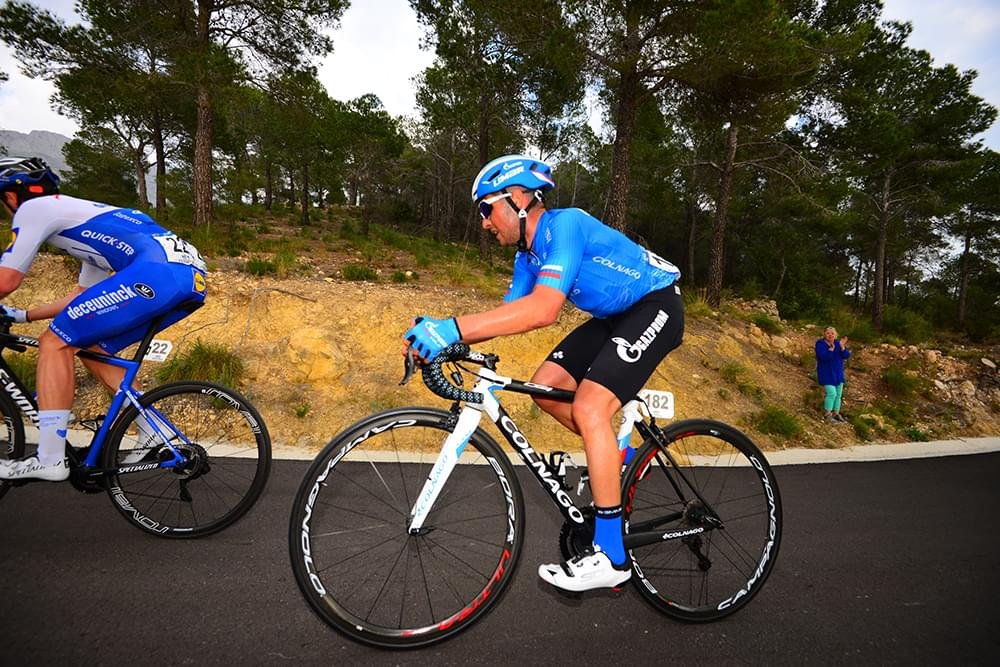
Peter Edmondson from uk, CC BY 2.0 httpscreativecommons.orglicensesby2.0, via Wikimedia Commons

Simone Velasco

Published: Updated:

In the world of professional cycling, where grit, strategy, and endurance intersect, Simone Velasco stands out as a beacon of Italian talent and determination. From his early days pedaling through the picturesque landscapes of Italy to competing on the international stage, Velasco's journey is a testament to the relentless pursuit of excellence.

Early Life and Introduction to Cycling

Born in Bologna, Emilia-Romagna, Simone Velasco was introduced to the sport at a young age. The Italian countryside, with its rolling hills and challenging terrains, provided the perfect backdrop for a budding cyclist. Velasco's passion for cycling was evident from the start, as he spent countless hours pedaling, driven by the dream of one day becoming a professional cyclist.

Amateur Career

Velasco's amateur career was marked by rapid progress and early signs of his potential. Competing in local and national races, he quickly made a name for himself within the cycling community. His dedication to training, coupled with a natural affinity for the sport, set the foundation for his future successes.

Turning Professional

The transition from an amateur to a professional cyclist is a pivotal moment in any athlete's career. For Velasco, this transition came after years of hard work and perseverance. Signing with his first professional team was not just a personal achievement but a step forward in his quest to make an impact on the world stage.

Professional Career Highlights

Throughout his professional career, Simone Velasco has demonstrated exceptional skill and resilience. Participating in prestigious races such as the Giro d'Italia and the Vuelta a España, Velasco has competed against some of the best cyclists in the world. His ability to excel in various types of races, from flat sprints to grueling mountain stages, showcases his versatility as a cyclist.

Notable Achievements

Velasco's palmarès includes impressive victories and commendable performances. One of his most notable achievements was winning a stage in the Tour of the Alps, where he outpaced a group of seasoned climbers in a breathtaking finish. This victory not only highlighted his climbing abilities but also marked him as a rider capable of winning under pressure.

Training Regimen and Dedication

Behind the successes of any professional athlete lies a rigorous training regimen and unwavering dedication. Velasco's approach to training combines physical preparation with strategic planning. By focusing on both his strengths and areas for improvement, he has continuously evolved as an athlete. His commitment to excellence is evident in his meticulous preparation for races and his ability to push beyond his limits.

Impact on Italian Cycling

Simone Velasco's rise in professional cycling has had a significant impact on the Italian cycling scene. As a source of inspiration for young cyclists, he embodies the spirit of Italian cycling – a blend of passion, tenacity, and skill. His achievements have contributed to the rich legacy of Italian cycling, encouraging a new generation of cyclists to pursue their dreams.

Challenges and Overcoming Adversity

Like any professional athlete, Velasco has faced his share of challenges and setbacks. Injuries and difficult race conditions have tested his resolve and forced him to adapt. However, Velasco's ability to overcome adversity speaks volumes about his character. Viewing each challenge as an opportunity to learn and grow, he has emerged stronger from every setback.

Personal Life and Interests

Away from the competitive world of cycling, Simone Velasco enjoys a life filled with hobbies and interests that keep him grounded. Whether it's exploring the Italian countryside or engaging in other sports for cross-training, Velasco values the balance between his professional and personal life. This balance, he believes, is key to maintaining mental and physical well-being.

Future Goals and Ambitions

Looking ahead, Simone Velasco remains focused on achieving further success in his career. With goals of participating in more Grand Tours and claiming victories in classic races, his ambition is unwavering. As he continues to train and compete, the cycling world eagerly watches, anticipating the next chapter in the remarkable journey of this Italian cycling prodigy.

Conclusion

Simone Velasco's story is a compelling narrative of passion, resilience, and achievement. From his early days of cycling in Italy to his current status as a professional athlete, Velasco has remained true to his dreams. His contributions to the sport extend beyond his victories, inspiring future generations of cyclists to pursue their ambitions with dedication and heart. As Velasco pedals forward, his legacy within the cycling community continues to grow, cementing his place among the sport's esteemed athletes.

Nation Dossier

Flag of Italy

Italy

A compact nation-state reference: scale, structure, capability, and performance — designed to sit beneath articles.

Governance Economy Made in Italy Performance
Italy — national feature image
Italy at a glance — then the bigger picture: what shaped the state, how it works, what it produces, and where it stands.

Italy — global snapshot

Stable reference signals for quick orientation.

Area

301,340 km²

Covers a long peninsula extending into the Mediterranean, plus two major islands — Sicily and Sardinia — and numerous smaller island groups. The geography includes alpine regions, fertile plains, volcanic zones, and extensive coastline, shaping settlement, climate, and transport patterns.

Population

~59 million

One of the largest populations in the European Union, with density concentrated in urban and northern regions. Long-term demographic trends include low birth rates, population ageing, and increasing reliance on inward migration for workforce balance.

Coastline

~7,600 km

A predominantly maritime nation bordered by the Tyrrhenian, Adriatic, Ionian, and Ligurian seas. The extended coastline supports ports, tourism, fisheries, naval infrastructure, and a long-standing seafaring and trading tradition.

UNESCO sites

61

The highest number of UNESCO World Heritage Sites globally, spanning ancient cities, archaeological landscapes, historic centres, and cultural routes. This reflects Italy’s layered civilisations and the density of preserved cultural assets across its territory.

Currency

Euro (EUR)

Member of the Eurozone, with monetary policy set at European Central Bank level. Use of the euro facilitates trade, investment, and financial integration across the EU single market.

Time

CET / CEST

Operates on Central European Time, with daylight saving applied seasonally. The time zone aligns Italy with major European capitals, supporting coordination in business, transport, and broadcasting.

Tourism

~50–65M

Among the world’s most visited countries, attracting visitors for heritage cities, landscapes, cuisine, and lifestyle. Tourism is economically significant but regionally uneven, with strong seasonal concentration in major destinations.

Global role

G7

A founding member of the European Union and a permanent participant in G7 coordination. Italy’s influence is exercised through diplomacy, industrial capability, cultural reach, and multilateral institutions.

Governance

A layered republic

A parliamentary republic with powers and delivery spread across state, regions, and comuni — which is why outcomes can vary by territory.

Economy

Diversified, export-capable

Services dominate overall output, while manufacturing remains a defining strength through specialised clusters and global supply chains.

Made in Italy

Quality as an ecosystem

Design, craft, engineering, and brand power — often delivered by small and mid-sized firms rooted in local capability.

Performance

Strengths with constraints

World-class sectors alongside long-running challenges: uneven productivity, demographic pressure, administrative complexity, and fiscal limits.

Italy governance
Governance
Italy economy
Economy
Made in Italy
Made in Italy
Italy performance
Performance
Italy history

History

From unification to a modern republic

Modern Italy is a relatively young nation-state built from older city-states, kingdoms, and strong regional identities. Unification created the national framework, but local character remained powerful — shaping language, administration, and culture across the peninsula. The post-war republic rebuilt institutions, expanded democratic participation, and redefined the state’s relationship with citizens through welfare, education, and public infrastructure. European integration then anchored Italy within shared rules and markets, while the late 20th and 21st centuries have focused on balancing growth, reform, and cohesion in a complex, decentralised country.

Italy contribution and influence

Contribution

Europe, culture, industry

Italy’s contribution travels through EU participation, diplomacy, research networks, industrial capability, and cultural reach. In practice, influence is often most visible through specific strengths: design and heritage leadership, advanced manufacturing and specialist supply chains, food and agricultural standards, and world-class tourism and creative industries. Italy also plays a sustained role in Mediterranean and European stability through alliances, humanitarian operations, and institutional cooperation. Rather than a single narrative, Italy’s global presence is best understood as a portfolio of high-impact domains where craft, identity, and technical competence combine.