AC Milan: A Legacy of Success, Style, and Global Football Excellence
Associazione Calcio Milan, commonly known as AC Milan, is one of the most iconic football clubs in the world. With a history spanning over a century, AC Milan has built a global legacy defined by success, style, and a deep connection with football’s most prestigious competitions. Known for its red and black colors, often referred to as the 'Rossoneri', AC Milan has won countless domestic and international honors, making it one of the most successful and revered clubs in football history. This article delves into the rich history of AC Milan, its key moments, legendary players, and its lasting impact on the world of football.
The Founding and Early Years: A Club is Born
AC Milan was founded on December 16, 1899, by English expatriate Herbert Kilpin and a group of fellow enthusiasts. Initially named Milan Foot-Ball and Cricket Club, the team quickly established itself as a serious competitor in Italian football. The club’s first taste of success came in 1901 when AC Milan won its first Italian championship, a precursor to the Serie A title.
Throughout the early decades of the 20th century, AC Milan steadily grew in stature, becoming one of the leading clubs in Italian football. While the club experienced success in its early years, the post-World War II era marked the beginning of Milan's ascent to global prominence.
The 1950s and 1960s: The First Golden Era
The 1950s marked the start of a golden era for AC Milan. Under the management of Hungarian coach Lajos Czeizler, Milan secured its first Serie A title in 44 years in 1951. The team featured players such as Gunnar Nordahl, one of Milan’s greatest strikers, and the famous Gre-No-Li trio of Swedish players: Gunnar Gren, Gunnar Nordahl, and Nils Liedholm. This period laid the foundation for Milan’s future dominance in Italian and European football.
The 1960s saw further success for the 'Rossoneri' under the guidance of coach Nereo Rocco, a pioneer of the 'catenaccio' defensive system. With Rocco at the helm, AC Milan won two European Cups (now known as the UEFA Champions League) in 1963 and 1969. The 1963 victory was particularly historic, as Milan became the first Italian club to win Europe’s most prestigious trophy. This era also produced legends such as Gianni Rivera, who became the symbol of Milanese football for his elegance, vision, and technical prowess.
The 1980s: The Birth of a Football Dynasty
The 1980s marked a transformative period for AC Milan. In 1986, the club was purchased by media mogul Silvio Berlusconi, whose ambitious vision and financial investment turned AC Milan into a global powerhouse. Berlusconi's leadership, coupled with the managerial brilliance of Arrigo Sacchi, revolutionized the club and redefined football tactics.
Sacchi’s Milan of the late 1980s is considered one of the greatest teams in football history. His tactical system emphasized high pressing, zonal marking, and attacking football, moving away from the traditional Italian defensive approach. Sacchi’s Milan featured a legendary lineup, including Dutch stars Ruud Gullit, Marco van Basten, and Frank Rijkaard, alongside Italian stalwarts like Franco Baresi and Paolo Maldini.
Under Sacchi’s management, Milan won back-to-back European Cups in 1989 and 1990, as well as multiple Serie A titles. The 4-0 demolition of Steaua Bucharest in the 1989 European Cup final is considered one of the most dominant performances in a European final, showcasing Milan’s tactical superiority and technical excellence.
The Capello Years: Continuing the Legacy
Following Sacchi’s departure, Fabio Capello took charge of AC Milan in the early 1990s, continuing the club’s remarkable success. Capello inherited a team of winners and further solidified Milan's dominance, guiding them to four Serie A titles in five seasons from 1992 to 1996.
Capello’s Milan also achieved European success, winning the Champions League in 1994 with a stunning 4-0 victory over Barcelona in the final. Despite being without key players due to injury and suspension, Milan produced a tactical masterclass, which remains one of the most iconic moments in the club’s European history.
During this period, Milan enjoyed one of the longest unbeaten runs in Serie A history, going 58 matches without defeat between 1991 and 1993. The Capello era, like Sacchi’s before it, reinforced AC Milan’s reputation as a club that combined tactical discipline with attacking flair and an unquenchable thirst for victory.
The 2000s: Return to European Glory
The early 2000s saw AC Milan return to the summit of European football. Under the leadership of coach Carlo Ancelotti, a former Milan player, the club experienced a resurgence. Ancelotti's Milan was known for its fluid, attacking football, with stars such as Kaká, Andrea Pirlo, Clarence Seedorf, and Andriy Shevchenko leading the charge.
Milan’s crowning achievement during this period came in 2003 when they won the UEFA Champions League after defeating Juventus in a dramatic penalty shootout in the final at Old Trafford. Two years later, Milan reached the 2005 Champions League final, only to suffer one of the most heartbreaking defeats in football history, losing to Liverpool despite leading 3-0 at halftime.
However, Milan avenged this loss in 2007, defeating Liverpool 2-1 in the Champions League final in Athens to claim their seventh European crown. With Ancelotti at the helm and a star-studded squad, Milan firmly re-established itself as a dominant force in Europe, continuing its legacy of success on the continental stage.
The Club’s Identity and Rivalry: The Derby della Madonnina
AC Milan’s identity is deeply rooted in its rivalry with Inter Milan, known as the 'Derby della Madonnina'. The derby is one of the most fiercely contested and historic rivalries in football, with both clubs sharing the iconic San Siro stadium. The name "Madonnina" refers to the statue of the Virgin Mary that sits atop the Milan Cathedral, symbolizing the city’s religious and cultural heritage.
The rivalry between AC Milan and Inter Milan transcends football, representing different social and political identities. AC Milan was traditionally supported by the working class, while Inter attracted a more bourgeois fanbase. This contrast has added an extra layer of intensity to the derby, which is renowned for its passionate atmosphere and dramatic matches.
Over the years, the 'Derby della Madonnina' has produced unforgettable moments, from last-minute goals to fiery confrontations between players. For both sets of fans, victory in the derby is a matter of immense pride and bragging rights, making it one of the most highly anticipated fixtures in world football.
Recent Years: A New Era of Ambition
The 2010s were a challenging period for AC Milan, with the club struggling to compete at the highest level due to financial difficulties and ownership changes. However, the appointment of new ownership, including investment from Elliott Management, marked the beginning of a new era of ambition.
The club's recent resurgence can be attributed to a blend of young talent and experienced leadership. Under coach Stefano Pioli, Milan has returned to the upper echelons of Serie A, with players like Gianluigi Donnarumma, Theo Hernández, and Zlatan Ibrahimović playing pivotal roles in the team’s revival. In the 2020-21 season, AC Milan secured a return to the UEFA Champions League after a lengthy absence, signaling that the club is once again a force to be reckoned with.
In 2022, AC Milan reached another milestone by winning their 19th Serie A title, their first league triumph in over a decade. This victory represented the culmination of years of rebuilding and investment in young talent, restoring the pride and prestige of the 'Rossoneri' faithful.
San Siro: The Heartbeat of Milanese Football
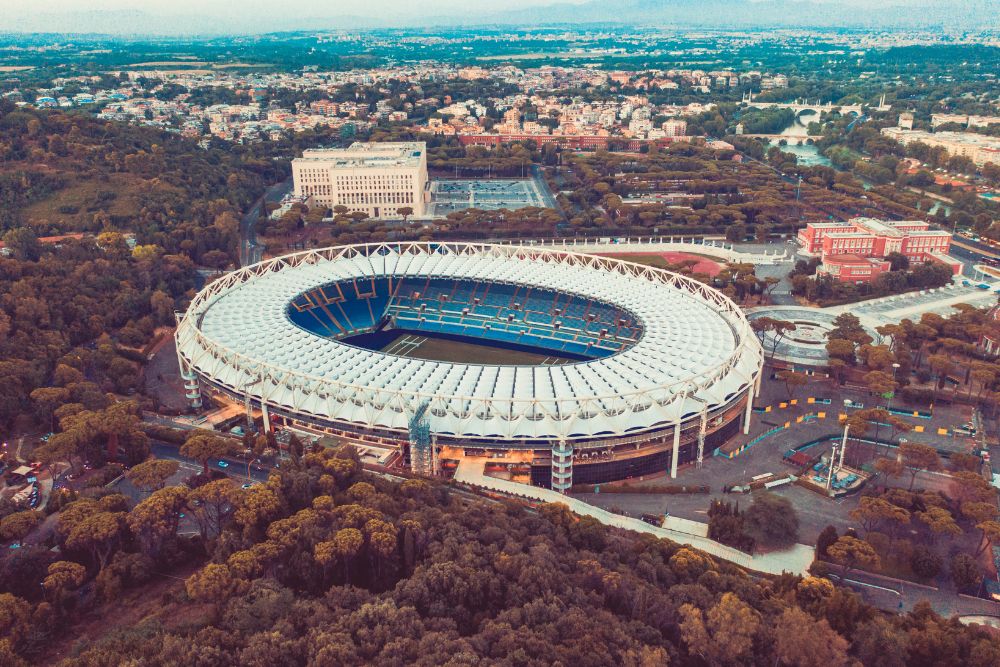
AC Milan shares the San Siro stadium with Inter Milan, one of the most iconic football stadiums in the world. Officially named the Stadio Giuseppe Meazza, San Siro has a capacity of over 75,000 and is renowned for its intense atmosphere, particularly during the 'Derby della Madonnina'. For AC Milan fans, the Curva Sud is the heart of their support, where passionate 'ultras' create breathtaking displays and chants that fill the stadium.
Plans for a new stadium have been in development, but for now, San Siro remains a temple of Milanese football, representing the rich history and traditions of both AC Milan and their city rivals.
AC Milan’s Place in Football History
AC Milan is one of the most successful clubs in football history, with 19 Serie A titles, 7 UEFA Champions League titles, 5 Coppa Italia trophies, and a host of other domestic and international honors. The club’s legacy of success is built on a foundation of tactical innovation, world-class players, and a relentless pursuit of excellence.
Milan’s distinctive red and black stripes are recognized globally, and the club has cultivated a massive fan base that spans continents. With a history of developing legendary players and producing unforgettable moments on the pitch, AC Milan's influence on the world of football is undeniable.
Conclusion
AC Milan’s journey through football history is one of triumph, style, and resilience. From its founding in 1899 to its golden eras of success in the 1960s, 1980s, and 2000s, the 'Rossoneri' have consistently set the standard for excellence in both Italian and European football. The club’s identity, built on fierce rivalries, iconic players, and a commitment to success, ensures that AC Milan remains a global symbol of footballing greatness.
As AC Milan continues to build for the future, the club's past serves as a constant reminder of the heights it can achieve. With a renewed sense of ambition, the 'Rossoneri' are poised to add new chapters to their storied history, inspiring generations of fans and players alike.