
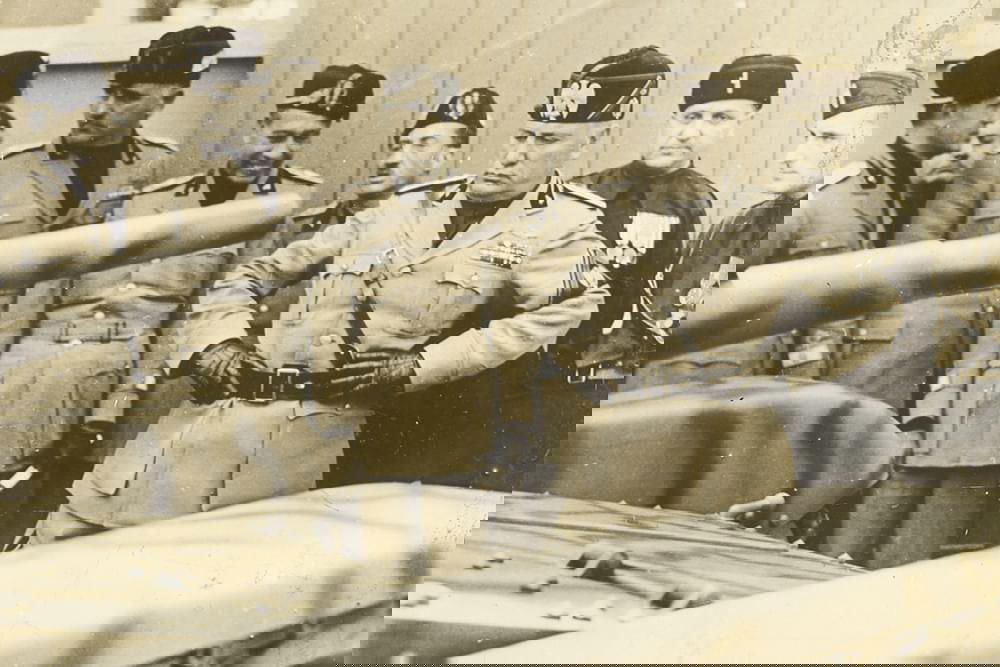
Fascism in Italy
Italian fascism, under the leadership of Benito Mussolini, emerged as a prominent political ideology and movement during the early 20th century. This article delves into the life of Mussolini, the principles of Italian fascism, its historical context, and its impact on Italy and the world.
Background and Early Life of Benito Mussolini
Benito Mussolini was born on July 29, 1883, in Predappio, a small town in Italy. He was the son of Alessandro Mussolini, a blacksmith and socialist, and Rosa Maltoni, a schoolteacher. Raised in a socialist household, Mussolini was influenced by his father's political beliefs. He later developed an interest in socialism and political activism during his early years.
Mussolini was a bright student and excelled in academics, showing particular interest in history, philosophy, and literature. He became involved in socialist and anti-clerical activities during his adolescence, which ultimately led to his expulsion from school. These experiences would shape his future political ideology and actions.Rise to Power and the Formation of Fascism
Mussolini's political journey took a sharp turn during World War I. Initially a fervent socialist, he broke ties with the Socialist Party due to his support for Italy's participation in the war, a position contrary to the party's anti-war stance. In 1919, he founded the "Fasci di Combattimento" (Fascist Combat Groups), which marked the birth of Italian fascism.
Italian fascism blended elements of authoritarianism, nationalism, corporatism, and anti-communism. Mussolini's ideology aimed at unifying the nation under a centralized government to restore Italy's glory and create a disciplined and powerful state.
Core Principles of Italian Fascism
Nationalism:
Italian fascism emphasized extreme nationalism and believed in the superiority of the Italian nation. It sought to unite all Italians under a single authoritarian state, viewing Italy as a great and deserving power on the world stage.
Authoritarianism
Fascism upheld a strong, centralized government led by a single leader, often characterized by a cult of personality. Mussolini served as the embodiment of this authoritarian rule, exerting control over every aspect of Italian society.
Totalitarianism
Italian fascism aimed to control and regulate every aspect of citizens' lives, including their beliefs, education, and even leisure activities. The state was seen as all-encompassing, with the individual subordinated to the collective good.
Corporatism
Fascism promoted a corporatist economic system, wherein various interest groups (corporations, trade unions, and the government) worked together to achieve the collective goals of the state. This system aimed to maintain order and prevent class struggle.
Anti-Communism
Italian fascism fiercely opposed communism and sought to eradicate leftist ideologies. Mussolini saw communism as a threat to the established social order and sought to eliminate it through aggressive repression.
Mussolini's Leadership and Policies
As the leader of Italy, Mussolini implemented policies and reforms to consolidate his power and transform Italy into a fascist state.
Squadrismo and March on Rome (1922)
Mussolini's paramilitary squads, known as "Squadristi," engaged in violent acts to intimidate political opponents and suppress opposition. The infamous March on Rome in 1922 culminated in Mussolini being appointed Prime Minister, marking the consolidation of fascist power.
Corporate State
Mussolini established the concept of a corporate state, where syndicates representing various sectors of the economy were controlled by the government to maintain stability and control over labor and production.
Suppression of Opposition
Mussolini suppressed political opponents, restricted civil liberties, and established a dictatorship that eliminated rival political parties, unions, and freedom of the press.
Propaganda and Cult of Personality
Mussolini utilized extensive propaganda to promote his image and ideology, fostering a cult of personality. He was portrayed as a strong and charismatic leader who would lead Italy to greatness.
Impact of Italian Fascism
Domestic Impact
Italian fascism drastically altered the fabric of Italian society, concentrating power in the hands of the state and suppressing dissent. It profoundly influenced education, media, and culture, promoting conformity and obedience to the regime.
Foreign Policy and Expansionism
Mussolini pursued an aggressive foreign policy, seeking to expand Italy's territory and influence. The invasion of Ethiopia (1935) and the alignment with Nazi Germany showcased Italy's ambitions for territorial expansion.
World War II and Downfall
Italy's alignment with Nazi Germany during World War II ultimately led to its downfall. The Allied invasion of Italy in 1943 and the subsequent collapse of the fascist regime marked the end of Mussolini's reign.
Conclusion
Benito Mussolini and Italian fascism left an indelible mark on the 20th century. Mussolini's authoritarian regime sought to reshape Italy and its people, promoting nationalism, totalitarianism, and corporatism. Although Mussolini's regime ended in failure and disgrace, Italian fascism remains a significant topic of study and debate, providing crucial insights into the consequences of extreme political ideologies and the importance of upholding democratic values.


