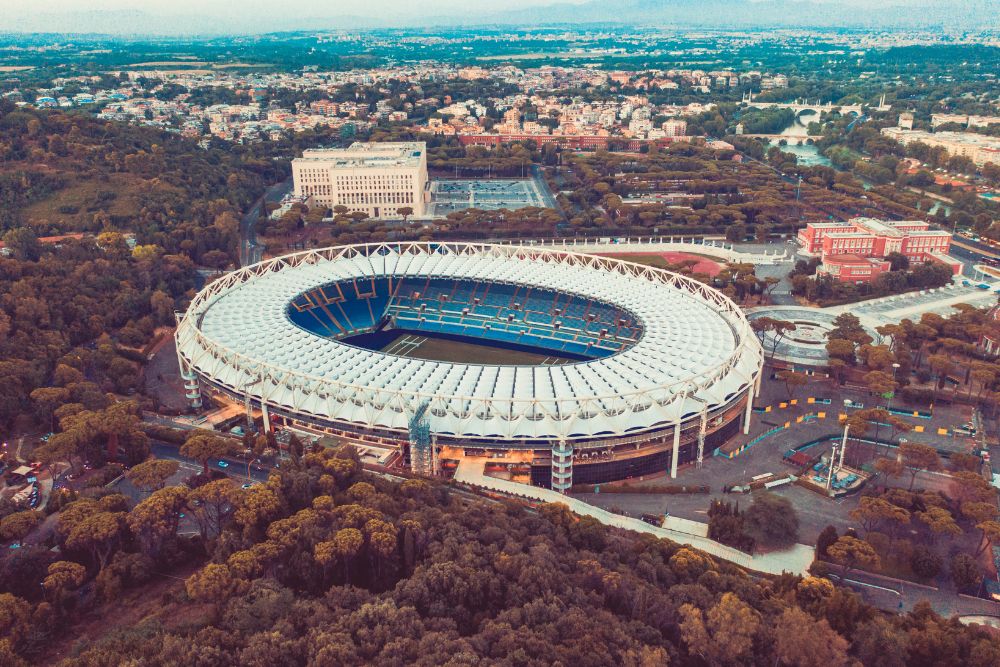
San Siro Stadium
San Siro Stadium, officially known as Stadio Giuseppe Meazza, is not just a football stadium; it is a symbol of Italian sports culture, a historical landmark, and an architectural marvel. Located in Milan, the heart of Italy’s Lombardy region, San Siro is one of the most famous and revered football stadiums in the world. It has been the stage for countless legendary matches, home to two of Italy’s most prestigious football clubs—AC Milan and Inter Milan—and a cultural hub for millions of fans who have passed through its gates.
A Brief History of San Siro Stadium
San Siro Stadium was inaugurated on September 19, 1926, with a match between Inter Milan and AC Milan, the two clubs that would later come to share this grand arena. The stadium was originally the idea of Piero Pirelli, the then-president of AC Milan, who envisioned a dedicated football stadium for the club. At the time of its opening, San Siro had a capacity of 35,000, a significant number for that era.
The stadium was named after the San Siro district of Milan, where it is located, and was primarily intended to serve as the home of AC Milan. However, in 1947, Inter Milan also moved into the stadium, and since then, the two clubs have shared the venue, creating one of the most intense and storied rivalries in football history—the Derby della Madonnina.
Architectural Evolution
San Siro Stadium has undergone several renovations and expansions over the decades, transforming it into the massive structure it is today, with a seating capacity of 80,018, making it the largest stadium in Italy.
1. 1935 Expansion:
The first major renovation occurred in 1935, when the capacity was increased to 55,000. This expansion included the addition of a second tier to the stands, providing a more comprehensive view of the pitch.
2. 1955 Renovation:
A second major renovation in 1955 saw the addition of a third tier, further increasing the stadium’s capacity and enhancing its structural integrity. This expansion was crucial in preparing the stadium for hosting large international matches.
3. 1990 World Cup Renovation:
In preparation for the 1990 FIFA World Cup, Italy undertook a significant renovation of San Siro. This renovation included the addition of a roof supported by 11 cylindrical towers, giving the stadium its distinctive and futuristic appearance. The towers also house ramps that provide access to the upper tiers, and the renovation added modern amenities, ensuring San Siro met the requirements of a world-class venue.
4. Modern Upgrades:
In the 21st century, San Siro has continued to evolve. Various technological upgrades have been made, including improved lighting, state-of-the-art audio systems, and high-definition screens. These modern touches ensure that San Siro remains a premier destination for football matches and other events.
The Shared Home of AC Milan and Inter Milan
San Siro’s unique status as the home of both AC Milan and Inter Milan adds a fascinating dynamic to the stadium’s history. Both clubs have achieved immense success while calling San Siro home, including numerous domestic and international titles. The atmosphere during the Derby della Madonnina, the local derby between the two clubs, is electric, with the stadium filled to capacity and split into a sea of red and black for AC Milan and blue and black for Inter Milan.
Each club has its distinct traditions and fan culture, and San Siro has been the backdrop for some of the most memorable moments in Italian and European football history. The stadium’s dual identity has only added to its mystique, making it a must-visit for football fans from around the world.
Cultural Significance and Events
Beyond football, San Siro Stadium is a cultural icon. It has hosted numerous events that go beyond the realm of sports, including:
1. Concerts:
San Siro is a major venue for concerts, attracting some of the biggest names in music. Artists like Madonna, U2, Bruce Springsteen, and Beyoncé have performed at the stadium, drawing massive crowds. The stadium’s acoustics and sheer size make it a spectacular venue for live music.
2. World Cup and European Cup Finals:
San Siro has hosted several important football matches, including World Cup games in 1934 and 1990 and four European Cup/Champions League finals (1965, 1970, 2001, and 2016). These events have solidified its status as one of Europe’s premier football stadiums.
3. Other Sports:
While primarily known for football, San Siro has also hosted other sports, including boxing, rugby, and even American football. Its versatility and capacity make it an ideal venue for large-scale sporting events.
Visiting San Siro: A Fan’s Experience
For football enthusiasts and tourists alike, visiting San Siro is an unforgettable experience. The stadium offers guided tours that take visitors through the history and the inner workings of this legendary arena. Here’s what you can expect during a visit:
1. Stadium Tour:
The tour typically includes access to the dressing rooms of both AC Milan and Inter Milan, the players’ tunnel, the pitch, and the stands. Walking out onto the pitch, imagining the roar of 80,000 fans, is a highlight for many visitors.
2. San Siro Museum:
The museum, located within the stadium, showcases the rich history of both AC Milan and Inter Milan, with exhibits featuring trophies, memorabilia, and interactive displays. It’s a treasure trove for fans of the clubs and football history buffs.
3. Matchday Experience:
Attending a live match at San Siro is an experience like no other. The passionate support of the fans, the intensity of the atmosphere, and the high-quality football on display make it a bucket-list experience for any football fan. The pre-match and post-match rituals, including fan chants and displays, add to the spectacle.
4. Stadium Store:
Both AC Milan and Inter Milan have official stores at the stadium, where you can purchase jerseys, scarves, and other memorabilia. It’s the perfect place to pick up a souvenir from your visit.
The Future of San Siro
As of recent years, there have been discussions about the future of San Siro. Both AC Milan and Inter Milan have proposed building a new, modern stadium to replace San Siro, citing the need for updated facilities and infrastructure. However, this proposal has met with mixed reactions from fans, who are deeply attached to the historical significance of San Siro.
While the future of the stadium remains uncertain, its legacy is undeniable. San Siro has been more than just a venue for football; it has been a fortress of memories, a cathedral of sport, and a cultural landmark in Milan. Whether it continues to host football matches or transitions into a new role, its place in the history of Milan and world football is secure.
Conclusion
San Siro Stadium is more than just a football stadium; it is an institution in the world of sports and a cultural icon in Milan. Its rich history, architectural grandeur, and significance as the shared home of AC Milan and Inter Milan make it a must-visit destination for football fans and tourists alike. Whether you’re watching a match, attending a concert, or simply exploring its history, San Siro offers an experience that is deeply rooted in the passion and tradition of Italian football. As the debate about its future continues, one thing is certain: San Siro will always be remembered as one of the greatest stadiums in the world.