Italian News Headlines 03-11-2025:Claudia Cardinale, legend of Italian cinema, has died at the age of 87 |
The Italian women's volleyball team has won the World Championships, their 36th consecutive victory |
Legendary Italian fashion designer, Giorgio Armani, has died at the age of 91 |
Italian authorities are expecting over 12 million vehicles on the roads over the 'Ferragosto' weekend |
45 people were injured in Rome when a petrol station exploded, following a smaller explosion caused by a truck hitting a gas pipe |
Twenty Italian seaside resorts have been awarded Cinque Vele status by the Legambiente and Touring Club Italiano, of which six are in Sardinia. The beach at Domus de Maria, in southern Sardinia, has received the highest ranking in 2025 |
The world's most famous Tik Toker, Italian, Kharby Lame, was arrested and then expelled from the United States for remaining in the country after his visa expired |
The Italian navy training ship, Amerigo Vespucci, arrived in Cagliari to be welcomed by Luna Rossa, the winner of the 37th America's Cup youth and women's tournament |
Italy will host the 38th edition of the America's Cup in Naples in 2027 |
Robert Francis Prevost from the USA has been chosen as the new pope, taking the name, Pope Leo XIV
Italian News Headlines 25-09-2025:Claudia Cardinale, legend of Italian cinema, has died at the age of 87 |
The Italian women's volleyball team has won the World Championships, their 36th consecutive victory |
Legendary Italian fashion designer, Giorgio Armani, has died at the age of 91 |
Italian authorities are expecting over 12 million vehicles on the roads over the 'Ferragosto' weekend |
45 people were injured in Rome when a petrol station exploded, following a smaller explosion caused by a truck hitting a gas pipe |
Twenty Italian seaside resorts have been awarded Cinque Vele status by the Legambiente and Touring Club Italiano, of which six are in Sardinia. The beach at Domus de Maria, in southern Sardinia, has received the highest ranking in 2025 |
The world's most famous Tik Toker, Italian, Kharby Lame, was arrested and then expelled from the United States for remaining in the country after his visa expired |
The Italian navy training ship, Amerigo Vespucci, arrived in Cagliari to be welcomed by Luna Rossa, the winner of the 37th America's Cup youth and women's tournament |
Italy will host the 38th edition of the America's Cup in Naples in 2027 |
Robert Francis Prevost from the USA has been chosen as the new pope, taking the name, Pope Leo XIV|
Aeolian Islands
Published:|Updated:
Places / Islands / Aeolian Islands
Sicily
Lipari
The Aeolian islands (Isole Eolie) are a group of seven islands located in the Tyrrhenian Sea about 25 kilometres north of Sicily and about 60 kilometres west of Calabria. The Aeolian Islands are one of the Italian Unesco World Heritage Sites and are a fascinating place to visit. Recently discovered by tourists, these spectacular volcanic islands can be very busy in July and August, attracting up to 200,000 visitors per year. The islands are: Lipari, Vulcano, Salina, Stromboli, Panarea, Filicudi and Alicudi. There is also a large rock called Basiluzzo.
Lipari
Lipari is the main island in the archipelago. It is ten kilometres long and five kilometres wide with an area of 37 square kilometres.
It is a captivating destination that offers a harmonious blend of natural beauty, rich history, and vibrant culture. Located off the northeastern coast of Sicily, this volcanic island is renowned for its breathtaking landscapes, crystal-clear waters, and archaeological treasures. With its idyllic beaches, charming towns, and geological wonders, Lipari entices visitors from around the world to immerse themselves in its unique allure.
One of the most striking features of Lipari is its volcanic origins. The island's volcanic nature is evident in its rugged cliffs, dramatic rock formations, and the omnipresent Mount Chirica, an inactive volcano that dominates the skyline. This volcanic heritage has left an indelible mark on the island's landscape, creating mesmerizing natural wonders such as the Valle Muria and the Pumice Quarries. The Valle Muria, with its striking cliffs and turquoise waters, is a haven for nature enthusiasts, offering opportunities for hiking, swimming, and photography. The Pumice Quarries, on the other hand, provide a fascinating glimpse into the island's mining history and display surreal landscapes of white pumice stone.
Lipari's main town, also named Lipari, is a charming hub of activity that beckons visitors to explore its narrow streets, vibrant markets, and historic sites. The town's quaint shops offer an array of local products, including handcrafted ceramics, exquisite jewelry, and the island's famous Malvasia wine. History aficionados will find delight in the town's archaeological museum, which houses a remarkable collection of artifacts from various periods, including the ancient Greek, Roman, and Norman eras. Strolling through Lipari's ancient fortress, the Castello di Lipari, is like stepping back in time, with its imposing walls, panoramic views, and hidden courtyards.
For those seeking relaxation and seaside bliss, Lipari presents an abundance of beautiful beaches and hidden coves. Canneto, located on the eastern coast, is a popular beach destination known for its golden sands and crystal-clear waters. Its shallow depths make it ideal for families with children, while its beachfront promenade offers a selection of beach clubs, cafes, and restaurants. Other notable beaches on the island include Spiaggia Bianca, famous for its white pebbles, and Vinci, a secluded cove accessible only by boat, providing an oasis of tranquility.
Exploring beyond the main town, Lipari's rugged coastline and surrounding waters reveal a treasure trove of natural wonders. Boat tours and excursions allow visitors to discover enchanting sea caves, like the Grotta del Cavallo and the Grotta dei Pipistrelli, which can be explored by snorkeling or diving. The marine reserve of the nearby island of Vulcano offers exceptional diving opportunities, with its vibrant underwater ecosystems and intriguing volcanic seascapes.
The cuisine of Lipari showcases the island's bountiful produce and seafood, offering a delightful fusion of flavors. Freshly caught fish, locally grown capers, and aromatic herbs create the foundation for dishes that capture the essence of the Mediterranean. The island's traditional cuisine includes specialties such as pasta with seafood, swordfish rolls, and the famous "pani cunzatu," a delicious sandwich filled with local ingredients. Dining in Lipari is an opportunity to savor the island's culinary heritage and indulge in authentic flavors.
Vulcano
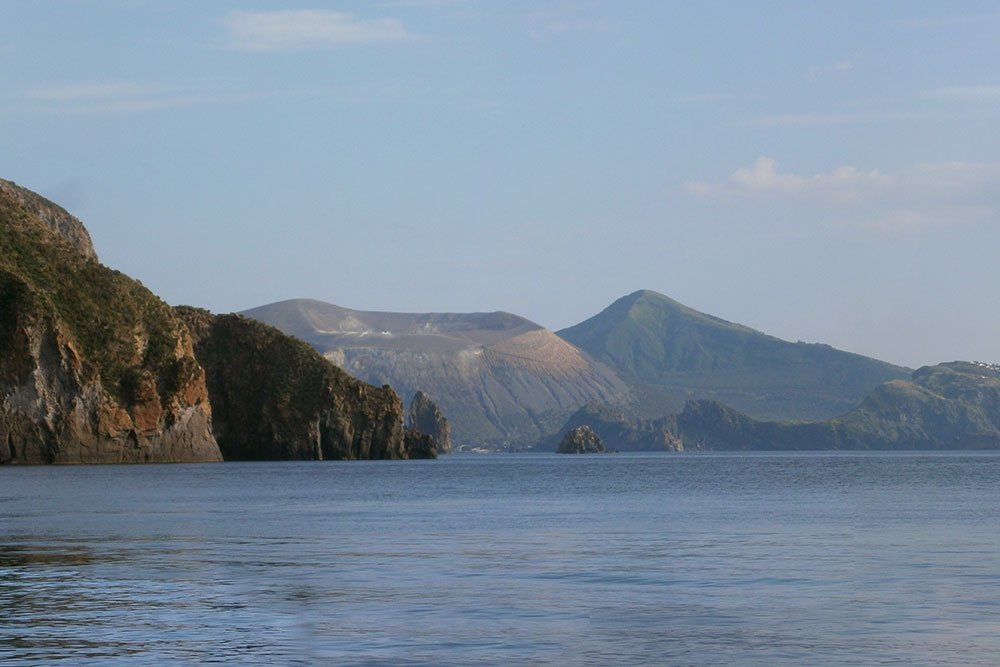
Vulcano is dominated by the Gran Cratere volcano cone which can be seen smoking, giving off clouds of sulphurous gas. The island is renowned for its mud baths and hot water springs.
Covering an area of just over 21 square kilometers, Vulcano is a relatively small island, but it is rich in natural beauty and geological wonders. The island's name itself is derived from the Roman god of fire, Vulcan, reflecting its volcanic origins. The centerpiece of the island is the Gran Cratere, a dormant volcano that last erupted in the late nineteenth century. Hiking to the top of this imposing crater rewards visitors with panoramic views of the island and its surrounding turquoise waters.
One of the most famous attractions on Vulcano is its mud baths. These natural thermal mud pools, known as "Fanghi," are believed to have therapeutic properties due to their high mineral content. Visitors can immerse themselves in the warm, sulfur-infused mud, which is said to have numerous health benefits. It's a unique and rejuvenating experience, leaving your skin feeling soft and refreshed.
Vulcano is also home to several geothermal hot springs. The warm waters are rich in minerals and are reputed to have healing properties. Many visitors take the opportunity to relax in these therapeutic pools, enjoying the natural warmth while surrounded by stunning volcanic landscapes. The hot springs are particularly popular in the winter months when the cooler temperatures make them even more inviting.
For those seeking outdoor adventure, Vulcano offers ample opportunities for hiking and exploring. The island's diverse terrain ranges from volcanic slopes covered in black sand to lush green valleys. A popular hike is the trail leading to the Fumaroles, where visitors can witness volcanic gases escaping from the earth's crust. The hike provides a fascinating insight into the island's geological activity.
The coastline of Vulcano boasts several beautiful beaches. The Spiaggia dell'Asino, named after the donkeys that were once used to transport goods on the island, is a popular choice for sunbathers and swimmers. Its fine black sand and clear waters provide an ideal spot for relaxation and enjoying the Mediterranean sun.
The local cuisine on Vulcano is a delightful blend of traditional Sicilian and Aeolian flavors. Seafood lovers will find a variety of fresh catches, including swordfish, tuna, and prawns, prepared in mouthwatering dishes. The island is also renowned for its capers, which grow abundantly in the fertile volcanic soil.
Vulcano's charm extends beyond its natural attractions. The island's small village, also named Vulcano, offers a glimpse into traditional island life. The narrow streets are lined with colorful houses, local shops, and charming cafes, where visitors can savor traditional Sicilian treats.
Salina
Salina is much greener. Covered in wooded hills, it is ideal for visitors who like walking and is the only island suitable for agriculture as it has a plentiful water supply.
It is the second largest of the islands at 27 square kilometres. It is two miles distance from Lipari. It was named 'Salina' after a salted lake found at the south-eastern tip of Santa Marina where the local inhabitants collected salt to preserve fish.
As you set foot on Salina, you're greeted by a captivating tapestry of nature. The island is known for its two prominent peaks, Monte Fossa delle Felci and Monte dei Porri, which provide a breathtaking backdrop for the island's picturesque towns and villages. The volcanic origin of the island has shaped its terrain, resulting in dramatic cliffs, fertile valleys, and secluded beaches that beckon exploration.
Salina's fertile soil offers a haven for agriculture, particularly the cultivation of grapes and capers. The island boasts lush vineyards and terraced gardens, where Malvasia and other grape varieties flourish under the Mediterranean sun. Take a stroll through the vineyards, and you'll discover wineries offering tastings of the island's renowned wines, including the sweet Malvasia delle Lipari. The aroma of fresh capers fills the air, and you can sample these flavorful delicacies in local dishes, enhancing the island's culinary offerings.
The island's main towns, Santa Marina Salina and Malfa, exude an authentic and welcoming atmosphere. Wander through the narrow streets lined with colorful houses and charming cafes, where locals gather to exchange stories and enjoy the slower pace of island life. Stop by the local markets, brimming with fresh produce, artisanal crafts, and regional specialties, to immerse yourself in the island's vibrant culture.
One of the highlights of Salina is its pristine beaches and secluded coves. Spiaggia Rinella, Spiaggia di Pollara, and Spiaggia dei Maronti are just a few of the idyllic spots where you can relax and soak up the sun. The crystal-clear waters are perfect for swimming, snorkeling, and diving, allowing you to explore the fascinating underwater world teeming with marine life and colorful corals.
For those seeking adventure, Salina offers a wealth of outdoor activities. Embark on a hike up Monte Fossa delle Felci, the highest point on the island, and be rewarded with panoramic views of the Aeolian archipelago. Explore the nature reserves and trails that crisscross the island, allowing you to discover hidden treasures at every turn. From rugged cliffs to verdant valleys, Salina's natural beauty never fails to captivate.
As the day draws to a close, be sure to witness the mesmerizing sunset over the Tyrrhenian Sea. Find a vantage point, perhaps on the cliffs of Punta del Perciato, and watch as the sun dips below the horizon, painting the sky with a palette of vibrant colors. It's a moment of tranquility and serenity that epitomizes the essence of Salina.
Salina, with its pristine landscapes, warm hospitality, and Mediterranean allure, offers a retreat from the bustling world. Whether you seek relaxation, adventure, or a taste of authentic Italian island life, Salina is a destination that captivates the senses and leaves a lasting impression. Immerse yourself in its beauty, and you'll discover a treasure trove of experiences that will make you yearn to return again and again.
Panarea
Covering an area of just 3.4 square kilometers, Panarea is the smallest and oldest island in the Aeolian chain. Despite its size, it exudes a sense of grandeur and allure that has captured the hearts of visitors for decades.
The island's dramatic landscape is dominated by two towering volcanic peaks, creating a stunning backdrop against the azure waters of the Mediterranean.
Panarea's charm lies in its unspoiled simplicity. The island has managed to maintain a sense of authenticity and escape the overdevelopment that plagues many popular tourist destinations. Its quaint villages, characterized by narrow cobblestone streets and whitewashed houses adorned with colorful bougainvillea, transport visitors to a bygone era of Mediterranean charm.
The main village, also called Panarea, is a bustling hub of activity. It offers a range of boutique shops, charming cafes, and exquisite restaurants serving up the freshest seafood caught by local fishermen. As the sun sets, the village comes alive with a vibrant nightlife, where visitors can dance under the stars and enjoy live music at the island's trendy bars and clubs.
Beyond the village, Panarea's natural beauty beckons to be explored. The island is blessed with crystal-clear waters that are ideal for snorkeling and diving. Discovering the colorful marine life and hidden coves beneath the surface is a favorite pastime for many visitors. Boat tours are also a popular activity, allowing tourists to explore the surrounding islands and discover secluded beaches accessible only by water.
For those seeking a sense of serenity, Panarea offers several thermal springs that have been renowned for their healing properties since ancient times. Relaxing in the warm, mineral-rich waters while gazing out at the panoramic views is an experience that rejuvenates both body and soul.
Panarea's small size and tranquil atmosphere make it the perfect destination for those who want to escape the hustle and bustle of everyday life. Its exclusivity has made it a favorite among celebrities and jet-setters, who frequent the island during the summer months. However, despite its glamorous reputation, Panarea remains a down-to-earth and welcoming place, embracing all who visit with its genuine hospitality.
Stromboli
Known as the "Lighthouse of the Mediterranean," Stromboli is home to one of the world's most active volcanoes, also named Stromboli.
The volcano is constantly active, erupting with bursts of lava and ash, creating a spectacle that can be seen from miles away. This natural phenomenon has earned the island its reputation as the "Island of Fire." Witnessing the volcanic activity is an awe-inspiring sight, especially when the eruptions occur at night, illuminating the sky with fiery sparks and casting a magical glow over the island.
Apart from its volcanic allure, Stromboli boasts a diverse and picturesque landscape. The island is characterized by black sandy beaches, rugged cliffs, and lush vegetation. Hiking enthusiasts can embark on a thrilling journey to the summit of the volcano, experiencing firsthand the raw power of nature. Guided tours ensure the safety of visitors and provide an opportunity to witness the volcanic explosions up close, making for an exhilarating adventure.
Stromboli is also home to charming villages that exude an authentic Mediterranean ambiance. The main settlement, also named Stromboli, is a cluster of whitewashed houses that cascade down the mountainside, overlooking the azure waters of the sea. Here, visitors can stroll through narrow cobblestone streets, lined with colorful flowers and boutiques selling local crafts and souvenirs. The island's population is relatively small, creating a tight-knit community where residents warmly welcome visitors and share stories of their island's rich history and traditions.
For those seeking relaxation, Stromboli offers an idyllic retreat. The island's tranquil beaches provide a serene escape, where visitors can bask in the sun, swim in crystal-clear waters, or indulge in water sports such as snorkeling and diving. The absence of mass tourism ensures a peaceful atmosphere, allowing visitors to unwind and connect with nature.
Cuisine on the island of Stromboli is a delight for food enthusiasts. The local gastronomy reflects the island's seafaring heritage, with fresh seafood taking center stage. Visitors can savor delectable dishes such as grilled swordfish, tuna carpaccio, and delicious pasta with locally sourced ingredients. The island's restaurants and trattorias offer a blend of traditional Sicilian flavors with a unique Strombolian twist, creating a culinary experience that tantalizes the taste buds.
To truly embrace the island's charm, witnessing Stromboli's famed "Sciara del Fuoco" is a must. This volcanic phenomenon occurs when the flowing lava meets the sea, creating steam and a spectacular display of light and sound. Boat tours allow visitors to witness this natural spectacle, navigating the waters around the island while marveling at the raw power and beauty of the volcanic activity.
Filicudi
Covering an area of approximately 9 square kilometers, Filicudi is the perfect destination for nature enthusiasts. The island boasts rugged landscapes, towering cliffs, and crystal-clear waters that enchant visitors from the moment they set foot on its shores.
Its dramatic coastline is adorned with picturesque coves, hidden caves, and pristine pebble beaches, providing an idyllic setting for relaxation and exploration.
One of the island's most prominent landmarks is "La Canna," a striking basaltic rock formation that rises majestically from the sea. It stands as a sentinel, guarding the island's beauty and creating a breathtaking sight for those who venture near. This natural wonder, along with the surrounding underwater world, attracts divers and snorkelers who are eager to explore the vibrant marine life that thrives in these pristine waters.
Filicudi is also known for its charming villages, each exuding its own unique charm and character. The main village, also called Filicudi, is a picturesque settlement nestled on a hilltop. Its narrow streets, traditional white-washed houses, and colorful flowers create a postcard-perfect scene. Walking through the village, visitors can immerse themselves in the island's local culture and enjoy the warm hospitality of the friendly inhabitants.
For history buffs, Filicudi offers a glimpse into its past through its archaeological sites. The Capo Graziano archaeological area showcases prehistoric settlements and rock carvings that date back to the Bronze Age. These ancient relics are a testament to the island's long and fascinating history, providing a window into the lives of its early inhabitants.
One of the most alluring aspects of Filicudi is its tranquil atmosphere. The island remains untouched by mass tourism, allowing visitors to experience a sense of serenity and solitude. With no cars on the island, transportation is mainly by foot or by boat, adding to the sense of peace and connection with nature. This slower pace of life encourages relaxation, introspection, and a reconnection with oneself.
Filicudi offers a range of outdoor activities for nature lovers. Hiking trails wind through the island's rugged terrain, offering stunning views of the surrounding sea and neighboring islands. These trails lead to hidden gems such as the Pecorini Mare village, famous for its charming harbor and seafood restaurants that serve freshly caught fish.
As the sun sets over Filicudi, the island transforms into a magical place. The absence of light pollution allows for breathtaking stargazing opportunities, revealing a night sky filled with countless stars and constellations. This celestial spectacle is a reminder of the island's remote location and its ability to transport visitors to a different world.
Alicudi
One of the most striking features of Alicudi is its dramatic topography. The island is dominated by a majestic volcanic cone, rising steeply from the sea, covered in vibrant green vegetation.
As there are no cars or roads on the island, walking becomes the primary mode of transportation, allowing visitors to immerse themselves fully in the stunning surroundings. Trails wind through terraced gardens, past ancient stone houses, and along precipitous cliffs, offering breathtaking views of the azure sea and neighboring islands.
Alicudi's secluded and unspoiled nature is a paradise for outdoor enthusiasts. Hiking trails crisscross the island, leading to secluded coves, hidden beaches, and panoramic viewpoints. Exploring Alicudi's rugged coastline by boat reveals hidden sea caves, ideal for snorkeling and diving adventures. The crystal-clear waters teem with marine life, including colorful fish and fascinating underwater rock formations. With its remote location, Alicudi is also a sanctuary for birdwatchers, who can observe a variety of migratory and indigenous species in their natural habitat.
Life on Alicudi is characterized by simplicity and a close connection with nature. The island has no cars, no ATMs, and limited infrastructure, providing a refreshing break from the modern world. Electricity is generated by solar panels, and water is collected from natural springs. The few small shops and restaurants offer locally sourced ingredients and traditional dishes, allowing visitors to savor the authentic flavors of the island. The islanders' warm hospitality and laid-back lifestyle create a welcoming atmosphere, making visitors feel like part of the community.
Alicudi's rich history adds to its charm. Archaeological sites dating back to prehistoric times can be explored, revealing the island's ancient roots. Ruins of old fortifications, watchtowers, and a small church offer glimpses into the island's past. The island's isolation and limited development have preserved its authenticity, allowing visitors to step back in time and experience a simpler way of life.
For those seeking a respite from the noise and stress of modern living, Alicudi is a haven of tranquility. Its remote location and lack of tourist crowds make it an ideal destination for those who value solitude and introspection. The absence of nightlife and commercial attractions fosters a sense of serenity and encourages visitors to reconnect with themselves and the natural world.